

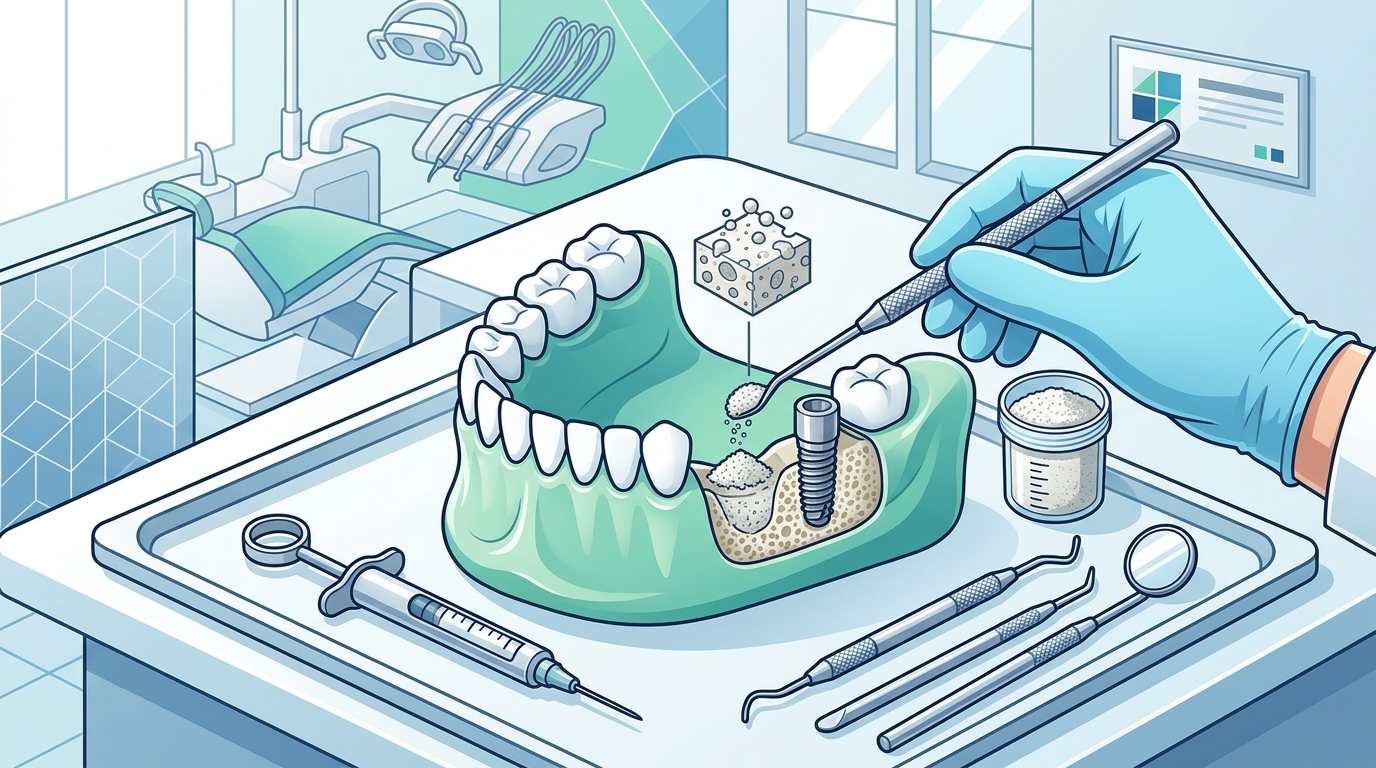
When jawbone volume is insufficient for a dental implant, bone grafting is the primary method used to rebuild the necessary structure. This procedure involves adding bone material to the jaw to create a stable foundation for the implant. At EDHAK Center in Banha, our specialists assess your bone density to determine the most effective grafting technique for your specific case.
Understanding the Need for Bone Grafting
Many patients lose bone volume after tooth extraction or due to periodontal disease. This loss can make it impossible to place a standard implant because the screw needs adequate bone to fuse with. Bone grafting is the surgical procedure of adding bone or bone-like material to the jaw to restore volume and density. Without this step, an implant may fail to integrate or could cause damage to surrounding structures.
The decision to graft depends on the size of the defect. Small gaps can often be filled during the implant placement itself, while larger areas require a separate healing period. Our team uses 3D CBCT scans to measure the exact dimensions of your jawbone. This precision ensures that we choose the right material and technique for your anatomy.
Types of Bone Graft Materials
Dentists use several types of materials to rebuild jawbone. Each option has specific benefits depending on the size of the defect and the patient's health history. Understanding these materials helps you make an informed decision about your treatment plan.
Autografts
An autograft is bone taken from another part of your own body, such as the chin or hip. This is considered the gold standard because it contains living cells that promote healing. However, it requires a second surgical site, which can increase recovery time and discomfort.
Allografts
An allograft is bone tissue from a human donor that has been processed and sterilized. This material is widely available and does not require a second surgery site. It acts as a scaffold for your body to grow new bone over time.
Xenografts
A xenograft is bone material derived from a non-human source, most commonly cattle. This material is processed to remove proteins that could cause an immune reaction. It is very stable and resists resorption, making it ideal for larger defects.
Allografts and Synthetic Materials
Synthetic grafts are made from biocompatible materials like calcium phosphates. These are used when natural bone sources are not suitable. They provide a framework for new bone growth without the risk of disease transmission. according to Bone grafts in
Common Grafting Techniques
The technique used depends on the location and severity of the bone loss. Our surgeons in Banha are trained in various advanced methods to ensure predictable outcomes.
Socket Preservation
Socket preservation is performed immediately after a tooth extraction. The empty socket is filled with graft material to prevent the bone from shrinking. This is the most cost-effective way to maintain bone volume for a future implant.
Guided Bone Regeneration (GBR)
GBR is a technique used to rebuild bone around an existing implant or in preparation for one. A membrane is placed over the graft to protect it from soft tissue invasion. This allows the bone to heal undisturbed. A large-scale study published in the PMC database confirms that implants placed with simultaneous bone augmentation show high clinical success rates.
Sinus Lift
For upper jaw implants, the maxillary sinus can limit available bone height. A sinus lift involves raising the sinus membrane and packing graft material underneath. This creates enough vertical bone to support an implant. This procedure is common in Banha clinics for patients with thin upper jaws.
Recovery and Success Rates
Recovery time varies by technique. Socket preservation may require a few weeks of healing, while larger grafts can take three to six months. During this time, the graft material integrates with your natural bone. Osseointegration is the process where the implant fuses directly with the living bone. This biological bond is what makes the implant stable and long-lasting.
Research indicates that bone augmentation significantly improves implant survival. A retrospective analysis found that implants placed after bone augmentation have high survival rates over a six-year follow-up period, as noted in PMC research. Following post-operative instructions is critical. You must avoid smoking and maintain good oral hygiene to ensure the graft heals properly.
Planning Your Treatment at EDHAK Center
Choosing the right grafting method requires a detailed clinical examination. At EDHAK Center, we combine digital planning with surgical expertise. We review your medical history and imaging to design a personalized treatment plan. This ensures that the graft material and technique are tailored to your specific needs.
Our team includes specialists in implantology and oral surgery who are experienced in complex bone cases. We prioritize patient comfort and safety throughout the process. If you are considering implants but are concerned about bone loss, a consultation is the first step. We will explain your options clearly and help you understand the timeline and costs involved.
Key Takeaways
- Bone grafting is essential when jawbone volume is insufficient for implant placement.
- Autografts use your own bone, while allografts and xenografts use donor or animal-derived materials.
- Socket preservation is the most efficient way to maintain bone after a tooth extraction.
- Guided Bone Regeneration (GBR) uses membranes to protect the graft during healing.
- Sinus lifts are required for upper jaw implants when vertical bone height is limited.
- Healing times range from a few weeks to six months depending on the technique used.
- 3D imaging is critical for planning the precise amount and location of the graft.
Frequently Asked Questions
Does bone grafting hurt?
The procedure is performed under local anesthesia, so you will not feel pain during the surgery. Some discomfort and swelling are normal after the procedure, but this can be managed with prescribed pain medication.
How long does it take for a bone graft to heal?
Healing time depends on the size of the graft. Small socket preservation grafts may heal in 4 to 8 weeks. Larger block grafts or sinus lifts typically require 3 to 6 months before the implant can be placed.
Can I eat normally after a bone graft?
You will need to follow a soft food diet for the first few days to weeks. Avoiding hard, crunchy, or hot foods helps protect the surgical site while it heals.
Is bone grafting safe?
Yes, bone grafting is a well-established and safe procedure. Complications are rare when performed by an experienced surgeon. Using sterile, high-quality materials minimizes the risk of infection or rejection.
Do I need a bone graft for every implant?
No, not every patient needs a graft. If you have sufficient bone volume and density, the implant can be placed directly. A CBCT scan will determine if you are a candidate for immediate placement.
What is the success rate of bone grafting?
Success rates are high, particularly when combined with modern implant systems. Studies show that implants placed with bone augmentation have long-term survival rates comparable to those placed in healthy bone.
Conclusion
Bone grafting is a vital step for many patients seeking dental implants. It restores the structural integrity of the jaw, ensuring that your new teeth are stable and functional. By understanding the different materials and techniques, you can feel confident in your treatment decisions. At EDHAK Center, we are committed to providing you with the highest standard of care. Our team in Banha is ready to help you achieve a healthy, confident smile. Contact us today to schedule your consultation and discuss your options.