
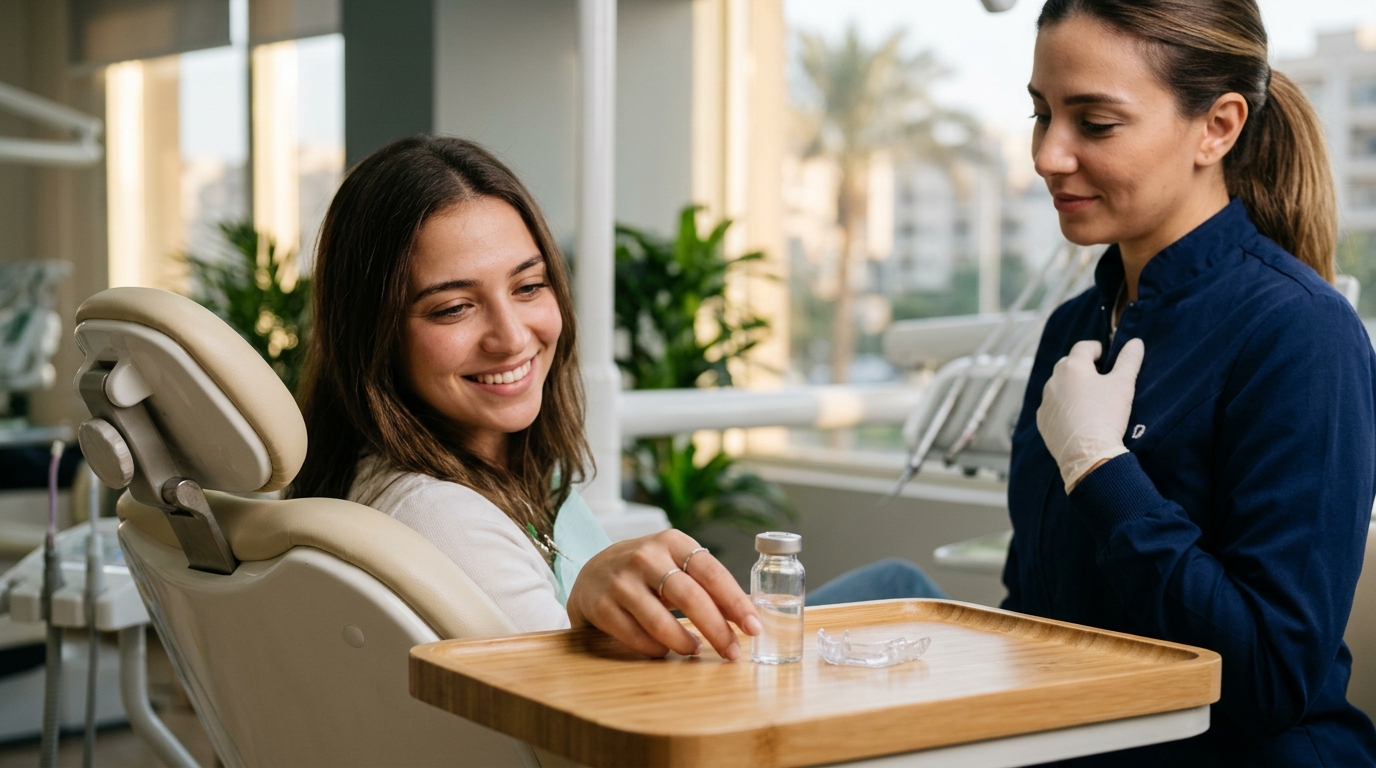
Professional whitening uses high-concentration gels under clinical supervision for rapid, dramatic results, while at-home methods rely on lower-strength products for gradual, subtle changes. The primary difference lies in the concentration of the active ingredient and the level of professional oversight. At EDHAK Center, we help patients determine which approach best suits their specific dental health and aesthetic goals.
Active Ingredient Concentration and Safety
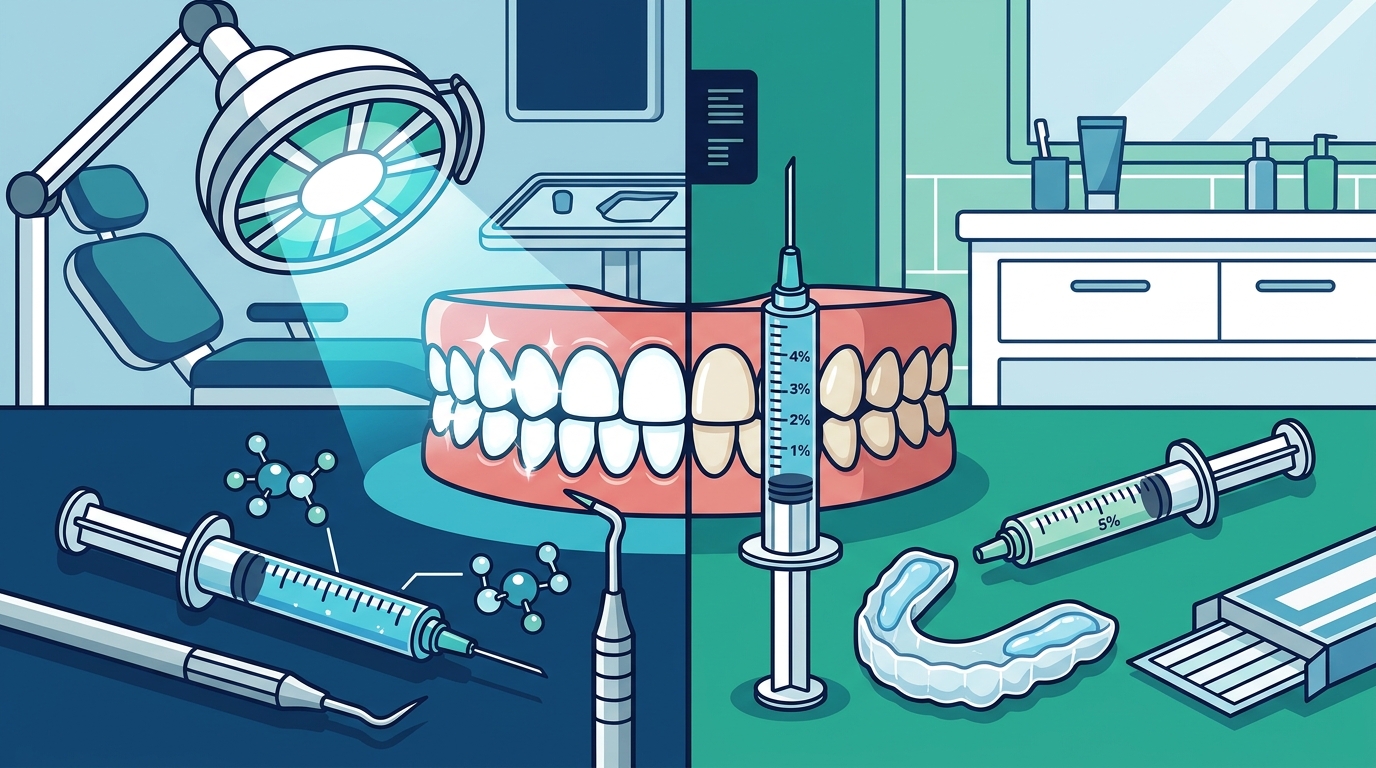
The most significant technical difference between the two methods is the concentration of the bleaching agent. Professional in-clinic treatments typically utilize hydrogen peroxide gels with concentrations ranging from 25% to 40%. These high-strength formulations are activated by light or laser energy to penetrate enamel quickly. In contrast, at-home kits and over-the-counter strips generally use carbamide peroxide or hydrogen peroxide at concentrations between 3% and 10%.
Higher concentrations yield faster results but carry a higher risk of sensitivity if not managed correctly. Professional systems usually include a desensitizing agent to help with any sensitivity, as noted by the University of Rochester Medicine. At-home products are safer for unsupervised use but require longer periods of application to achieve similar shade changes. Understanding this chemical difference is crucial for setting realistic expectations for your smile transformation.
Speed of Results and Treatment Duration
Time is a major factor when choosing between these methods. In-clinic professional whitening can lighten teeth by 3 to 8 shades in a single one-hour visit. This makes it an ideal option for patients who need a quick fix before a wedding, photoshoot, or important event. The results are immediate and visible the moment you leave the chair.
At-home whitening, whether through dentist-prescribed trays or store-bought strips, is a gradual process. It typically takes two to three weeks of consistent daily use to see significant changes. While slower, this method allows for a more natural transition in color. For patients who prefer a subtle shift rather than a dramatic change, the slower pace of at-home treatments is often a benefit rather than a drawback. The choice depends entirely on your timeline and how much change you desire.
Customization and Clinical Supervision
Professional whitening at a clinic like EDHAK Center involves a comprehensive assessment before any treatment begins. The dentist evaluates your enamel health, checks for existing restorations, and ensures your gums are healthy. This clinical supervision ensures that the treatment is safe and tailored to your specific anatomy. Custom-fitted trays made from a scan of your teeth are often used in professional take-home programs, ensuring the gel stays in contact with the teeth and away from the gums.
At-home over-the-counter products are one-size-fits-all. They do not account for individual dental conditions, such as receding gums or sensitive teeth. Without professional guidance, patients may apply the product incorrectly, leading to uneven results or gum irritation. The level of customization in professional treatments ensures a more uniform and predictable outcome, which is a key advantage for those seeking a polished, professional smile.
Cost Considerations and Long-Term Value
Price is often the deciding factor for many patients. In Egypt, professional in-clinic whitening sessions typically cost between EGP 3,500 and EGP 7,000. This price includes the expertise of the dentist, the high-concentration materials, and the safety protocols. At-home kits and strips are significantly cheaper, often costing a fraction of the professional fee. However, the lower cost comes with lower concentration and slower results.
When evaluating value, consider the longevity of the results. Professional whitening often provides more durable results because the enamel is thoroughly cleaned and treated under controlled conditions. At-home methods may require more frequent reapplication to maintain the desired shade. For a detailed breakdown of costs, you can review our teeth whitening guide. Investing in professional care often means fewer repeat treatments in the long run, offering better overall value for money.
When Professional Whitening Is Not the Answer
It is important to understand that whitening only affects natural tooth enamel. It will not change the color of existing veneers, crowns, or composite fillings. If you have restorations in your smile, whitening may create a mismatch between your natural teeth and your dental work. In such cases, a dentist might recommend replacing the restorations after whitening to ensure a uniform shade.
Additionally, certain types of staining, such as tetracycline staining or deep intrinsic discoloration from past trauma, do not respond well to standard whitening methods. These cases often require alternative treatments like veneers or internal bleaching. A professional consultation is essential to determine if whitening is the right solution for your specific type of discoloration. At EDHAK Center, we provide honest assessments to ensure you choose the most effective treatment path.
Key Takeaways
- Professional whitening uses 25-40% hydrogen peroxide for fast, dramatic results in one visit.
- At-home methods use 3-10% peroxide for gradual, subtle changes over weeks.
- Clinical supervision in professional treatments ensures safety and prevents gum irritation.
- Whitening does not affect existing crowns, veneers, or fillings.
- Professional treatments in Egypt typically cost EGP 3,500 to EGP 7,000 per session.
- Custom-fitted trays in professional programs offer better fit and safety than OTC strips.
- Consult a dentist to determine if your specific type of staining is responsive to whitening.
Frequently Asked Questions
Is professional whitening safer than at-home kits?
Both are safe when used as directed, but professional whitening is performed under clinical supervision. This reduces the risk of improper application, gum burns, or enamel damage that can occur with unsupervised at-home use.
How long do the results of professional whitening last?
Results typically last between one and three years, depending on your diet and oral hygiene habits. Avoiding staining foods and drinks like coffee, tea, and red wine helps maintain the whitened shade longer.
Can I use at-home kits after professional whitening?
Yes, many patients use at-home kits or touch-up strips to maintain their results between professional sessions. This is a cost-effective way to keep your smile bright without undergoing a full in-clinic treatment every time.
Does whitening damage my enamel?
What should I do if my teeth are sensitive after whitening?
Sensitivity is a common side effect that usually fades within 24 to 48 hours. Using a desensitizing toothpaste and avoiding extreme temperatures can help manage the discomfort. If sensitivity persists, consult your dentist for further evaluation.
Conclusion
Choosing between professional and at-home teeth whitening depends on your desired outcome, timeline, and budget. Professional treatments offer faster, more dramatic results with the safety of clinical oversight, while at-home methods provide a gradual, lower-cost alternative. For personalized advice and a comprehensive assessment of your dental health, schedule a consultation with our team. Contact EDHAK Center today to discuss your smile goals and find the right whitening solution for you.