

Step-by-Step Guide to Selecting Your Ideal Teeth Whitening Treatment
Teeth whitening is a multi-billion dollar global industry that continues to grow as more individuals seek aesthetic dental improvements. According to recent market analysis, the global teeth whitening market is projected to reach significant valuation milestones by 2026, driven by consumer demand for non-invasive cosmetic enhancements. This growth reflects a broader shift toward proactive oral aesthetics rather than reactive dental care. Understanding the specific mechanisms behind each treatment type is essential for making an informed choice that balances efficacy, safety, and cost.
Understanding Whitening Mechanisms
Before selecting a treatment, you must understand how whitening agents work. Hydrogen peroxide is the primary active ingredient in most professional whitening systems. It penetrates the enamel to break down stain molecules through oxidation. This chemical reaction lightens the tooth structure without altering its physical integrity.
Another critical component is carbamide peroxide, which breaks down into hydrogen peroxide and urea. This compound is often found in take-home kits because it releases the active agent more slowly. The slower release reduces sensitivity but requires a longer treatment duration. Knowing the difference helps you predict the timeline and intensity of your results.
External stains from coffee, tea, and wine sit on the enamel surface. Internal stains originate within the dentin layer. Surface stains respond well to mild abrasives and low-concentration gels. Internal stains require higher concentrations of peroxide to penetrate deeply. This distinction dictates whether you need a quick in-office boost or a sustained home regimen.
Evaluating Your Dental Baseline
Your starting point determines the safest and most effective path. You cannot whiten teeth that have untreated cavities or active gum disease. In fact, applying whitening agents to compromised teeth can cause severe pain and further damage. A professional examination is the mandatory first step in this process.
During a consultation, your dentist will assess your enamel thickness and gum health. Thin enamel may restrict the use of high-concentration agents. Sensitive gums might require desensitizing protocols before any whitening begins. These factors are not optional; they are safety prerequisites for any successful outcome.
Additionally, you must identify the source of your discoloration. Some medications, such as tetracycline antibiotics, cause intrinsic gray or brown banding. These stains are notoriously difficult to treat and often require extended treatment plans. Natural yellowing, however, typically responds very well to standard peroxide-based treatments. Accurate diagnosis prevents wasted time and money on ineffective methods.
Comparing In-Office Treatments
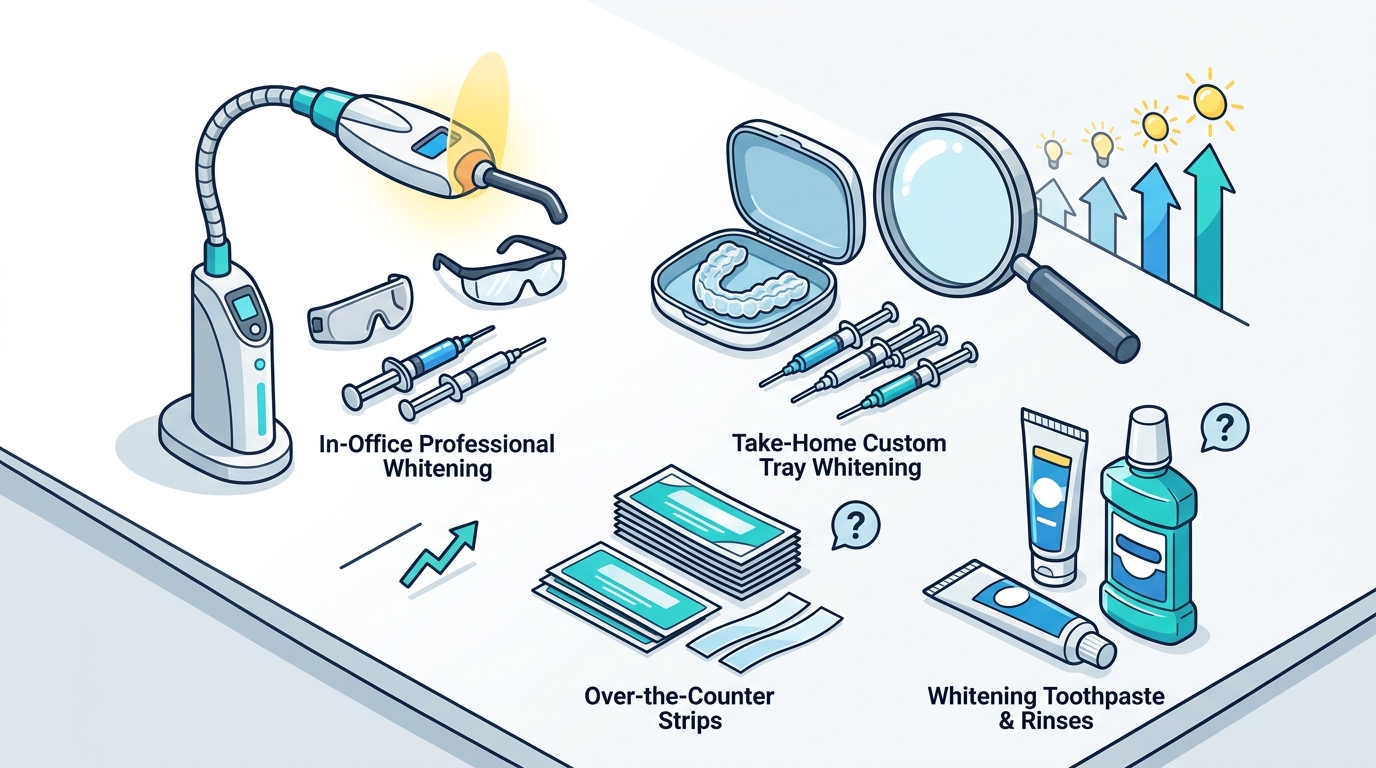
In-office whitening offers the most immediate results. These treatments use high-concentration hydrogen peroxide, often activated by specialized LED lights. The light energy accelerates the oxidation process, allowing for dramatic changes in a single visit. This method is ideal for individuals with tight schedules or those seeking instant gratification.
The primary advantage of professional in-office care is control. Your dentist monitors your sensitivity levels in real-time. They can adjust the gel application or pause the light activation if discomfort arises. This level of oversight is impossible with over-the-counter products. The results are also more uniform, avoiding the patchy appearance that can occur with DIY attempts.
However, in-office treatments come with a higher price point. You are paying for the expertise, the technology, and the immediate convenience. For many patients, the cost is justified by the speed and safety. If you have complex staining or specific aesthetic goals, this route offers the highest predictability. You can view examples of such transformations in our Before & After Gallery.
Analyzing Home Kits
Take-home whitening kits provide a middle ground between professional care and drugstore strips. These kits typically include custom-fitted trays and a lower-concentration peroxide gel. You wear the trays for a specified period each day, usually over two to four weeks. This gradual approach minimizes sensitivity while achieving significant lightening.
Custom trays are superior to one-size-fits-all options. They ensure the gel stays in contact with the tooth surface without leaking onto the gums. Leakage causes chemical burns and uneven whitening. Custom fabrication by a dental professional guarantees a precise fit that maximizes efficacy and comfort.
Over-the-counter strips are another option but lack the customization of professional kits. They adhere directly to the teeth, which can lead to uneven pressure and results. While convenient, they often contain lower concentrations of active ingredients. This means you may need to use them for a longer duration to see comparable results. For those seeking a balance of cost and quality, a dentist-supervised home kit is often the optimal choice.
Selecting the Right Provider
The quality of your whitening outcome depends heavily on the provider you choose. A qualified dentist does more than apply gel. They evaluate your oral health, recommend the appropriate strength, and provide post-care instructions. This holistic approach ensures long-term success and prevents adverse reactions.
Look for a practice that emphasizes personalized care. The team at EDHAK Center specializes in tailored cosmetic solutions. They assess your unique dental anatomy to create a plan that respects your sensitivity thresholds. This personalized attention is a hallmark of premium dental care.
Furthermore, consider the practice's commitment to ongoing education. Dentistry evolves rapidly, with new materials and techniques emerging regularly. A forward-thinking practice stays updated on the latest safety standards and efficacy data. This ensures you receive the most advanced and reliable treatments available. You can learn more about our approach in our About section.
Key Takeaways
- Assessment First: Always undergo a professional dental exam before starting any whitening regimen to rule out cavities or gum disease.
- Ingredient Awareness: Hydrogen peroxide is the standard for rapid results, while carbamide peroxide offers a slower, gentler alternative.
- Customization Matters: Custom-fitted trays from a dentist provide superior gel retention and safety compared to generic over-the-counter strips.
- Sensitivity Management: In-office treatments allow for real-time sensitivity monitoring, reducing the risk of post-treatment pain.
- Provider Expertise: Choose a practice with a proven track record in cosmetic dentistry, such as EDHAK Center, for optimal outcomes.
- Realistic Expectations: Whitening results vary based on the cause of discoloration; intrinsic stains require longer treatment plans.
- Maintenance is Key: Avoid stain-causing foods and beverages for 48 hours post-treatment to prolong your results.
Frequently Asked Questions
How long do teeth whitening results last?
Results typically last from six months to two years, depending on your diet and oral hygiene habits. Avoiding coffee, red wine, and tobacco can significantly extend the lifespan of your whitening.
Is teeth whitening safe for sensitive teeth?
Yes, but it requires careful management. Dentists can use desensitizing agents and lower-concentration gels to minimize discomfort. It is crucial to consult a professional before attempting whitening if you have known sensitivity.
Can I whiten my dental implants or crowns?
No, whitening agents do not affect artificial materials. If you have restorations, you may need to replace them after whitening to match your new tooth shade. This is a common consideration in cosmetic planning.
What is the difference between in-office and take-home whitening?
In-office whitening uses higher concentrations of gel for faster results in a single visit. Take-home kits use lower concentrations over several weeks, offering a more gradual and often more comfortable experience.
How much does professional teeth whitening cost?
Costs vary based on the method and extent of treatment. In-office treatments are generally more expensive due to the immediate results and professional oversight. Take-home kits offer a more budget-friendly alternative with comparable long-term efficacy.
Are there any side effects to teeth whitening?
The most common side effect is temporary tooth sensitivity. Gum irritation can also occur if the gel leaks onto soft tissues. These effects usually subside shortly after treatment ends.
Can I whiten my teeth if I have fillings?
Yes, you can whiten your natural teeth with fillings. However, the fillings will not change color. This may result in a mismatch between your natural teeth and the existing restorations.
Book Your Consultation
Selecting the right whitening treatment is a personal decision that requires professional guidance. At EDHAK Center, we provide expert evaluations and customized plans to help you achieve a brighter, more confident smile. Do not leave your oral aesthetics to chance. Contact us today to schedule your appointment and take the first step toward your ideal smile.