

Thin Jawbone Implants: The 2026 Guide to Bone Grafting & Success
Yes, you can receive dental implants even with thin jawbones. Modern techniques like bone grafting and sinus lifts allow patients with insufficient bone volume to achieve stable, long-lasting restorations. This guide explains how EDHAK Center in Banha, Egypt, assesses your specific anatomy and utilizes advanced surgical protocols to ensure successful implant integration despite bone density challenges.
Bone Grafting Techniques
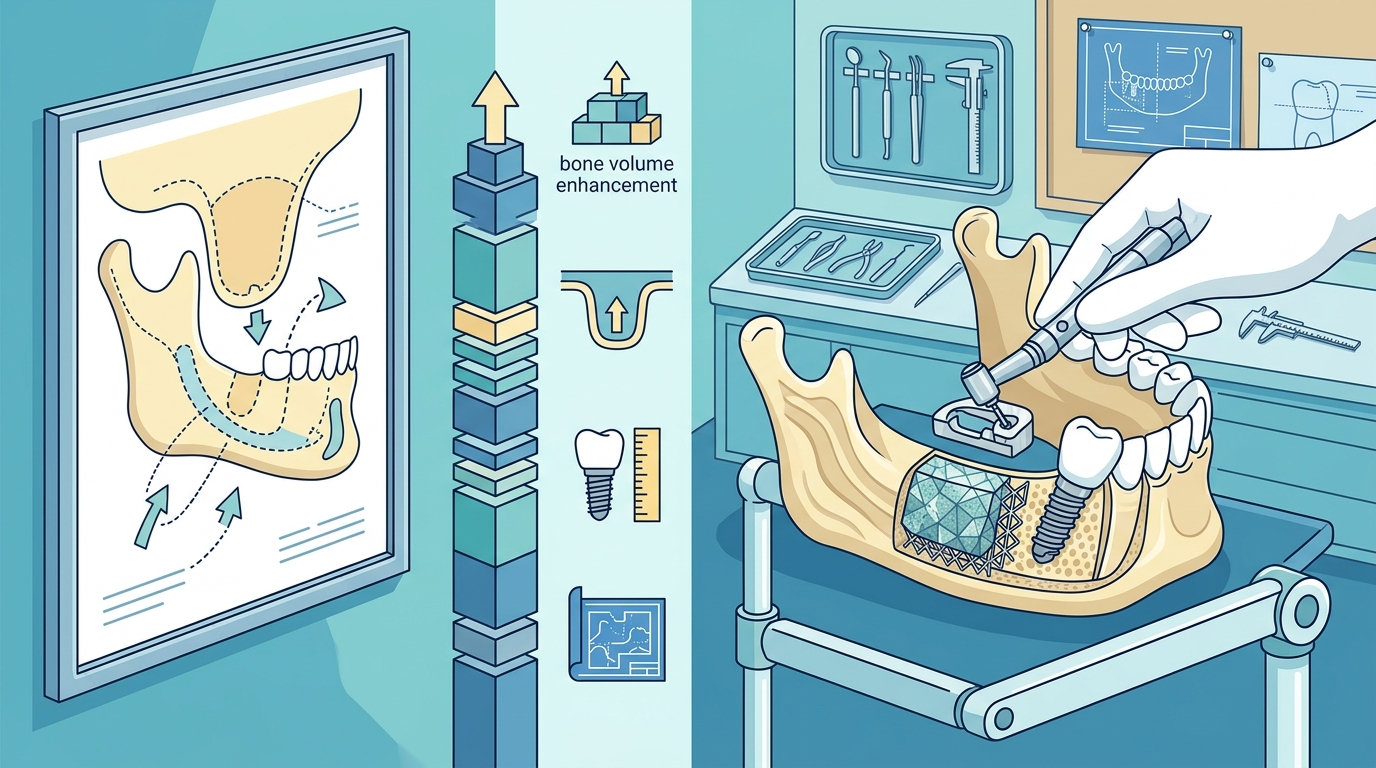
Bone grafting is a surgical procedure that adds volume to the jawbone to support dental implants. When natural bone resorbs after tooth loss, the jaw becomes too thin to hold a standard implant. Grafting rebuilds this foundation. At EDHAK Center, we utilize various grafting methods tailored to the severity of bone loss.
Autogenous Bone Grafts
Autogenous grafts use bone harvested from another site in the patient's body, such as the chin or hip. This is the gold standard because it contains living cells that promote rapid healing. However, it requires a second surgical site, which can increase recovery time.
Allografts and Xenografts
Allografts use processed human bone, while xenografts use animal-derived bone, typically bovine. These materials are processed to remove biological risks but retain the structural scaffold needed for new bone growth. They are often preferred for larger defects due to their availability and ease of use.
Alloplasts and Synthetic Materials
Alloplasts are synthetic materials made from biocompatible substances like hydroxyapatite. They are inert and do not carry disease risks. While they may integrate more slowly than biological grafts, they provide a stable framework for bone regeneration in specific clinical scenarios.
Sinus Lift Procedures
A sinus lift is a specialized bone grafting procedure used in the upper jaw. The maxillary sinus sits directly above the upper molars and premolars. When teeth are lost, the sinus floor can descend, leaving insufficient bone height for implants. This procedure elevates the sinus membrane to create space for bone graft material.
Internal (Lateral Window) Sinus Lift
This technique involves creating a small window in the bone wall next to the sinus. The surgeon lifts the sinus membrane and packs graft material underneath. It is ideal for patients with significant bone loss, typically less than 4mm of remaining bone height.
External (Crestal) Sinus Lift
Also known as a transalveolar approach, this method is performed through the implant site itself. It is less invasive and suitable for patients with moderate bone loss, usually between 4mm and 6mm of remaining bone. It can often be performed simultaneously with implant placement.
Clinical Assessment Requirements
Clinical assessment is the critical first step in determining implant viability. It involves a comprehensive evaluation of oral health, systemic conditions, and anatomical structures. A thorough assessment ensures that the treatment plan is safe and effective. Preventive care and regular check-ups help maintain the oral environment necessary for successful grafting.
Medical History Review
Surgeons review medical history to identify conditions that affect healing. Uncontrolled diabetes, smoking, and certain medications can impair bone regeneration. Managing these factors is essential before proceeding with surgery.
Oral Health Evaluation
Active gum disease (periodontitis) must be treated before implant placement. Infection can compromise the graft and implant. We ensure that the oral environment is healthy and stable before any surgical intervention.
Specialized Implant Designs
Narrow-Diameter Implants
Short Implants
Short implants are used when vertical bone height is insufficient. They reduce the need for sinus lifts or bone grafts. Their shorter length allows for placement in areas with limited vertical space, offering a less invasive alternative.
Specialized Implant Types
Specialized implant types refer to specific materials and configurations used for difficult cases. These implants are selected based on the patient's bone quality and quantity. The choice of implant type directly impacts the success rate and longevity of the restoration.
Zygomatic Implants
Zygomatic implants are extra-long implants that anchor into the cheekbone (zygoma) rather than the jawbone. They are used for patients with severe maxillary bone loss who are not candidates for traditional grafting. This provides immediate stability for full-arch restorations.
Subperiosteal Implants
Subperiosteal implants are custom-made frames that rest on top of the jawbone, under the gum tissue. They are used when bone height is insufficient for endosteal implants. While less common today, they remain an option for specific severe cases.
3D Imaging Assessment
3D imaging assessment is the cornerstone of modern implant planning. Two-dimensional X-rays provide limited information about bone volume. Cone Beam Computed Tomography (CBCT) provides a three-dimensional view of the jaw. This allows for precise measurement of bone width, height, and density.
CBCT Scans
Digital Planning Software
Digital planning software integrates CBCT data with intraoral scans. It allows surgeons to simulate implant placement virtually. This ensures that the implant is positioned optimally for both function and aesthetics. The software can also guide the creation of surgical guides for accurate execution.
Key Takeaways
- Thin jawbones do not disqualify you from dental implants.
- Bone grafting rebuilds volume using autogenous, allograft, or synthetic materials.
- Sinus lifts are essential for upper jaw cases with insufficient vertical bone.
- Comprehensive clinical assessment ensures safe and successful outcomes.
- 3D CBCT imaging is mandatory for precise planning in complex cases.
- EDHAK Center in Banha provides expert care for complex implant cases.
Frequently Asked Questions
Can I get implants if my jawbone is too thin?
Yes, bone grafting and sinus lift procedures can increase bone volume to support implants. Specialized implant designs may also be used in some cases.
What is the most common bone grafting material?
Xenografts (bovine-derived) and allografts (human-derived) are commonly used due to their availability and effectiveness in promoting bone growth.
How long does a sinus lift take to heal?
Healing typically takes 4 to 8 months, depending on the technique used and the amount of graft material placed.
Is 3D imaging necessary for implant planning?
Yes, CBCT scans are essential for accurately assessing bone volume and avoiding vital structures like nerves and sinuses.
Do narrow implants work in thin bone?
Can I eat normally after a bone graft?
You will need to follow a soft diet for several weeks to allow the graft to heal properly. Your surgeon will provide specific dietary guidelines.
Conclusion
Thin jawbones are a common challenge, but they are not a barrier to successful dental implant treatment. With advanced techniques like bone grafting, sinus lifts, and specialized implant designs, patients can achieve stable and functional restorations. At EDHAK Center, we combine expert clinical assessment with 3D imaging to create personalized treatment plans. If you are concerned about your bone density, to schedule a consultation and explore your options.