
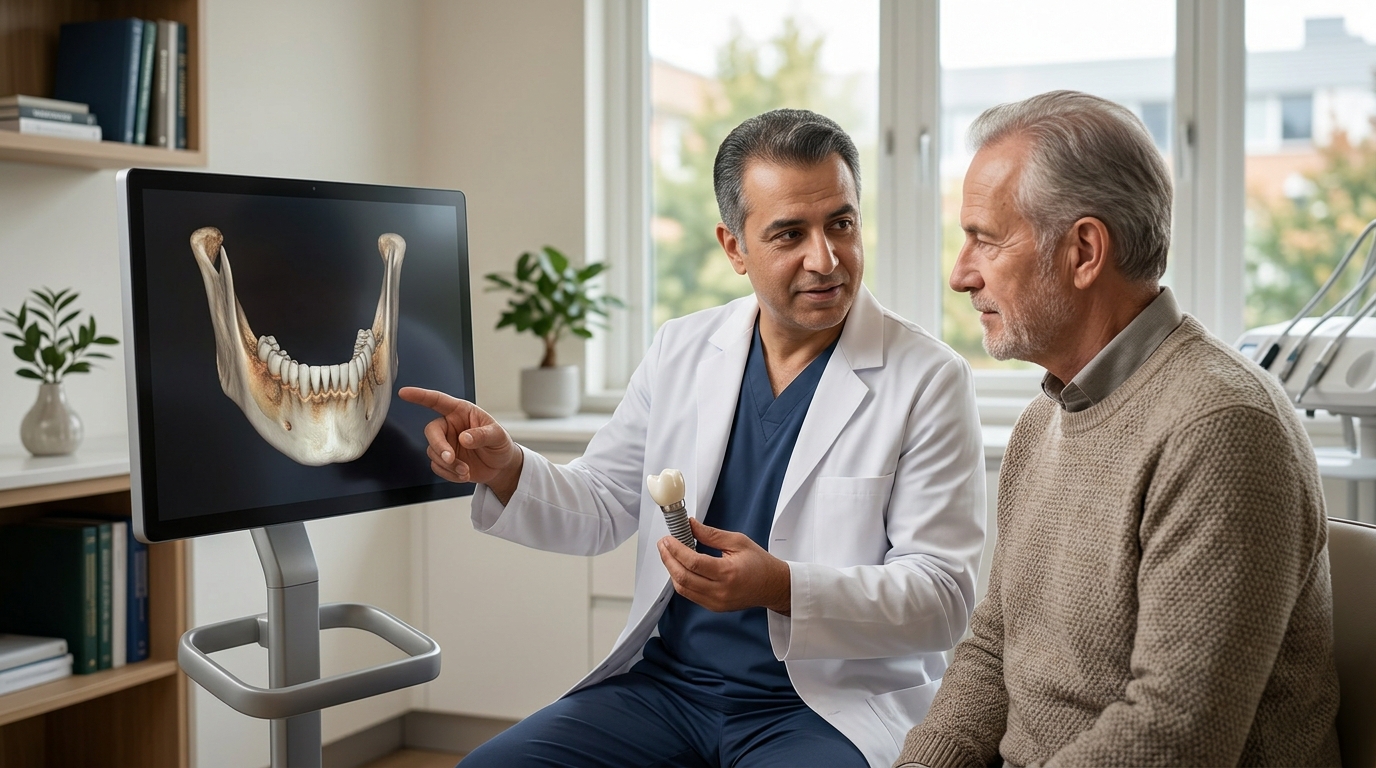
Approximately 77% of adults over the age of 34 have lost at least one permanent tooth, and a significant portion of those individuals face the challenge of insufficient bone density for traditional implant placement. This anatomical limitation often leads to premature bone resorption, where the jawbone shrinks due to the lack of tooth root stimulation. Understanding the specific protocols for treating thin jawbones is critical for restoring both function and aesthetics. This guide details the clinical pathways available to patients in Banha and beyond, ensuring you have the factual basis to make informed decisions about your oral health.
Understanding the Challenge of Thin Jawbone
When a tooth is lost, the alveolar bone that once supported it begins to deteriorate. This process is known as bone resorption. Without the mechanical stimulation provided by a tooth root, the body reabsorbs the calcium and minerals in that area. Over time, this results in a thin jawbone that lacks the volume and density required to anchor a standard titanium implant.
Thin jawbone is not merely an aesthetic concern. It is a structural deficit that compromises the stability of dental prosthetics. If a standard implant is placed in insufficient bone, it risks failure due to lack of osseointegration. Osseointegration is the process where the jawbone fuses directly to the surface of the titanium implant, creating a solid anchor. Without adequate bone, this fusion cannot occur reliably.
Patients often assume that thin jawbone means they are disqualified from receiving implants. This is a common misconception. Modern dentistry has developed specialized techniques to bypass bone loss or regenerate the necessary structure. At EDHAK Center, we evaluate every case to determine the most efficient path to restoration, whether that involves advanced surgical techniques or less invasive alternatives.
The Diagnostic Process and Imaging
Before any surgical intervention, a precise diagnostic phase is mandatory. General dental X-rays provide a two-dimensional view, which is insufficient for assessing bone width and height accurately. The gold standard for evaluating thin jawbone is Cone Beam Computed Tomography (CBCT). CBCT imaging provides a three-dimensional map of the jaw, allowing surgeons to measure bone density and identify vital structures like nerves and sinuses.
This imaging allows the dental team to plan the exact angle and depth of implant placement. It reveals whether the bone is thin in the anterior (front) or posterior (back) regions. The posterior maxilla, or upper back jaw, is particularly prone to thinning due to its proximity to the sinus cavities. Accurate diagnosis prevents complications and ensures that the chosen treatment plan is viable for your specific anatomy.
During your initial consultation at EDHAK Center, we utilize this advanced technology to create a personalized surgical guide. This precision reduces surgical time and enhances the predictability of the outcome. We do not rely on guesswork. Every measurement is verified before we proceed to the treatment phase.
Zygomatic Implants: The Advanced Solution
For patients with severe bone loss in the upper jaw, traditional implants and even bone grafting may not be feasible. In these cases, zygomatic implants offer a revolutionary alternative. Zygomatic implants are significantly longer than standard implants. They anchor not in the jawbone, but in the zygomatic bone, which is the cheekbone.
The zygomatic bone is dense and stable, providing a secure foundation even when the jawbone has atrophied. This technique bypasses the need for extensive bone grafting procedures. Patients who undergo zygomatic implant placement often receive their fixed teeth on the same day as the surgery. This immediate function is a major advantage over traditional methods that require months of healing.
This procedure requires specialized surgical expertise. It is not a routine implant placement. The trajectory of the implant must be carefully calculated to avoid the orbit and sinus cavities. At EDHAK Center, we adhere to strict clinical protocols to ensure safety and longevity. The success rate for zygomatic implants is high when performed by experienced specialists.
The All-on-4 Protocol Explained
The All-on-4 technique is a strategic approach to full-arch restoration. It utilizes four dental implants to support a full bridge of teeth. The key innovation lies in the angulation of the posterior implants. Instead of placing them vertically, the back implants are tilted at an angle of up to 45 degrees.
This tilting allows the implants to engage the densest available bone, often avoiding areas of thin jawbone or sinus cavities entirely. By maximizing the use of existing bone, the need for bone grafting is frequently eliminated. This protocol is particularly effective for patients who have lost all teeth in an arch or are facing imminent extraction.
The All-on-4 method provides immediate stability. A temporary prosthesis is attached on the day of surgery, allowing patients to leave the clinic with a functional smile. This approach reduces the overall treatment time and cost compared to placing six or more implants. For more details on our restorative options, visit our Gallery to see before and after results.
Sinus Elevation and Bone Grafting
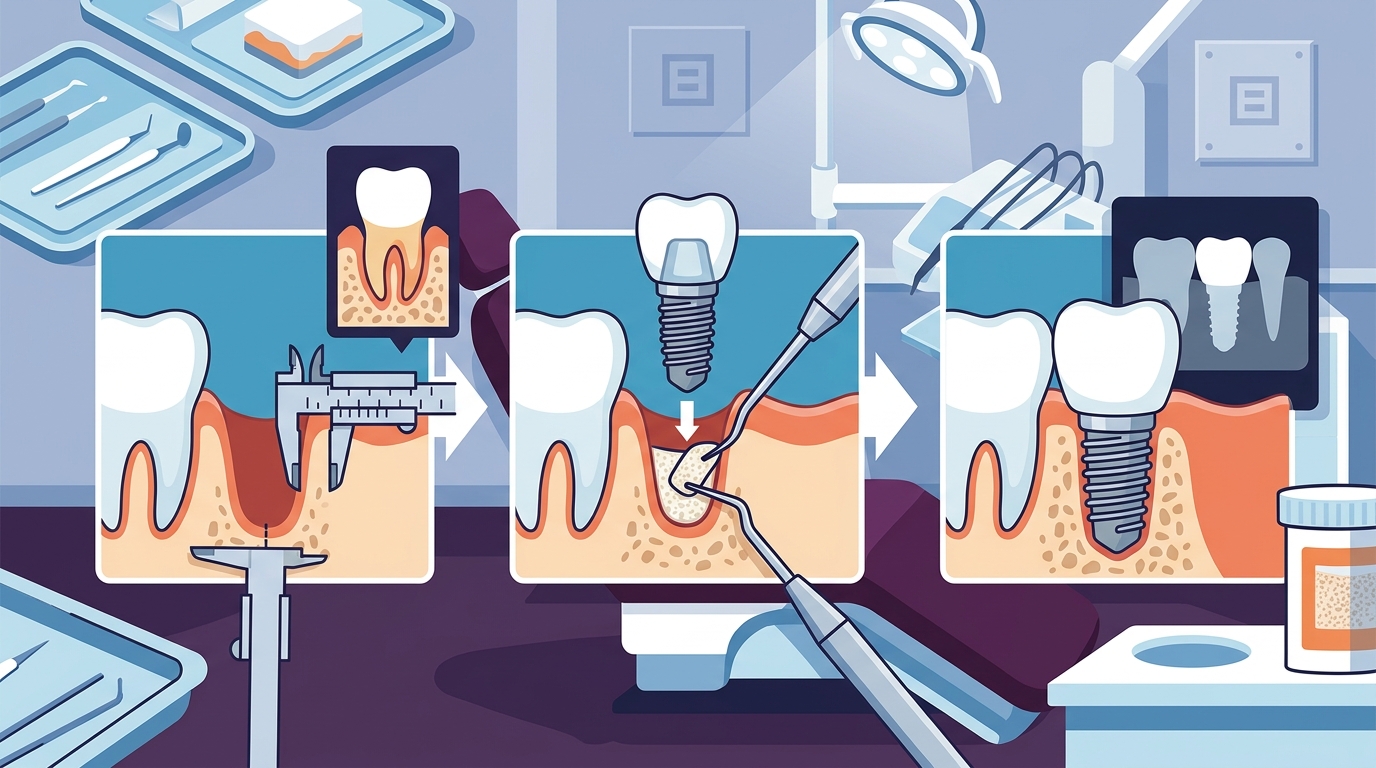
When the upper back jaw lacks sufficient height, a sinus lift procedure may be recommended. The maxillary sinus is an air-filled space above the upper teeth. When teeth are lost, the sinus floor drops down, reducing the bone height available for implants. Sinus elevation involves lifting the sinus membrane and placing bone graft material underneath.
This graft material acts as a scaffold for new bone growth. Over a period of four to nine months, the body integrates the graft with the natural bone, creating a solid base for implant placement. This is a proven method for restoring bone volume in the posterior maxilla. It allows patients who were previously ineligible for implants to receive them.
Bone grafting can also be performed in conjunction with implant placement in cases of mild to moderate bone loss. The graft material is placed around the implant to encourage bone regeneration. This combined approach shortens the overall treatment timeline. We discuss the specific grafting needs for your case during your consultation to ensure you understand the healing process.
Comparison of Treatment Options
Choosing the right treatment depends on the severity of bone loss, the location of the missing teeth, and your overall health. The table below summarizes the primary options for patients with thin jawbone.
| Treatment Option | Bone Requirement | Healing Time | Best For |
|---|---|---|---|
| Zygomatic Implants | Minimal to None | Immediate Function | Severe upper jaw bone loss |
| All-on-4 | Strategic Angulation | Immediate Function | Full arch restoration |
| Sinus Lift + Implants | Requires Grafting | 4-9 Months | Upper back teeth replacement |
| Standard Implants | Adequate Volume | 3-6 Months | Moderate bone density |
Key Takeaways
- Bone Resorption is Inevitable: Jawbone loss begins immediately after tooth extraction, making early intervention critical.
- Zygomatic Implants Bypass Bone Loss: These implants anchor in the cheekbone, eliminating the need for grafting in severe cases.
- All-on-4 Maximizes Existing Bone: Tilting posterior implants allows for stability in thin bone without extensive surgery.
- CBCT Imaging is Essential: Three-dimensional scans are required to accurately assess bone density and plan surgery.
- Immediate Function is Possible: Advanced protocols allow for temporary teeth on the day of surgery.
- Sinus Lifts Restore Volume: This procedure adds bone height to the upper jaw for future implant placement.
- Expertise Matters: Complex cases require specialized surgeons with advanced training in implantology.
Frequently Asked Questions
Can I get dental implants if I have thin jawbone?
Yes, having thin jawbone does not disqualify you from receiving implants. Techniques like zygomatic implants and the All-on-4 protocol are specifically designed for patients with significant bone loss. These methods utilize alternative anchoring points or strategic angulation to ensure stability.
How long does the healing process take for bone grafting?
Healing time for bone grafting typically ranges from four to nine months. During this period, the graft material integrates with your natural bone. The exact duration depends on the size of the graft and your body's healing response. Your surgeon will monitor progress via follow-up imaging.
Are zygomatic implants more expensive than standard implants?
Zygomatic implants are generally more complex and require specialized surgical expertise, which can affect the cost. However, they often eliminate the need for additional procedures like bone grafting, which can reduce overall treatment time and associated costs. We provide detailed cost breakdowns during your consultation.
What is the success rate for implants in thin bone?
When performed by experienced specialists using appropriate protocols, the success rate for implants in thin bone is high. Zygomatic implants, in particular, have shown long-term success rates comparable to standard implants in healthy bone. Proper oral hygiene and regular check-ups are essential for longevity.
Do I need a sinus lift for upper jaw implants?
A sinus lift is required if the upper back jaw lacks sufficient bone height due to sinus expansion. This is common after tooth loss. If the bone is adequate, a sinus lift is not necessary. Our diagnostic imaging will determine if this procedure is needed for your specific case.
Can I get teeth on the same day as implant surgery?
Yes, with protocols like All-on-4 or zygomatic implants, it is possible to receive a temporary fixed prosthesis on the day of surgery. This allows for immediate function and aesthetics. The final permanent teeth are placed after the implants have fully integrated with the bone.
How do I maintain implants with thin jawbone?
Maintenance is similar to natural teeth but requires extra diligence. You must brush and floss daily, use interdental brushes, and attend regular professional cleanings. Avoiding hard foods and tobacco is crucial for preserving the bone around the implants. Regular visits to EDHAK Center ensure early detection of any issues.
Schedule Your Consultation
Living with thin jawbone should not prevent you from having a healthy, functional smile. Advanced implant techniques have made it possible to restore your dentition even in complex cases. The first step is a comprehensive evaluation to determine the best path forward for your unique anatomy.
At EDHAK Center, we combine advanced technology with expert surgical care to deliver predictable results. We invite you to book an appointment to discuss your options. Our team is dedicated to guiding you through every step of the process with clarity and precision.
Take control of your oral health today. Contact us to schedule your diagnostic consultation and discover how we can help you achieve a lasting, confident smile.