

Essential Criteria for Selecting the Right Teeth Whitening Treatment
According to the American Dental Association, nearly 10 million Americans get their teeth whitened every year, making it one of the most requested cosmetic dental procedures in the United States. This surge in demand reflects a growing cultural emphasis on personal grooming and the psychological impact of a bright smile. However, the market is saturated with options ranging from over-the-counter strips to professional laser treatments. Choosing the wrong method can lead to irreversible enamel damage, severe sensitivity, or uneven results. This guide breaks down the critical factors you must evaluate before committing to a whitening protocol.
Understanding Whitening Mechanisms
Before selecting a product, you must understand how whitening agents interact with tooth structure. Teeth whitening is the process of removing stains and discoloration from the surface and deeper layers of the enamel. The primary active ingredients in most whitening products are hydrogen peroxide or carbamide peroxide. These agents penetrate the enamel to break down stain molecules into smaller, less visible particles.
The concentration of these peroxides dictates both the speed of results and the potential for side effects. Professional treatments typically use higher concentrations, which require careful monitoring by a dentist to protect the gums and soft tissues. Over-the-counter products use lower concentrations, offering a slower but safer approach for mild discoloration. Understanding this chemical process helps you set realistic expectations for how quickly your teeth will lighten.
Evaluating Tooth Sensitivity
Tooth sensitivity is the most common complication associated with whitening treatments. If you have existing sensitivity, your choice of treatment must prioritize comfort and nerve protection. High-concentration peroxides can irritate the dental pulp, leading to sharp, transient pain when exposed to hot or cold stimuli. A dental professional can assess your current sensitivity levels and recommend desensitizing agents to use alongside whitening.
For individuals with sensitive teeth, carbamide peroxide is often a better choice than hydrogen peroxide. Carbamide peroxide breaks down more slowly, releasing peroxide gradually and reducing the shock to the nerve. Additionally, treatments that include fluoride or potassium nitrate can help strengthen the enamel and block pain signals. Always disclose your sensitivity history to your provider to avoid unnecessary discomfort.
Comparing Treatment Options
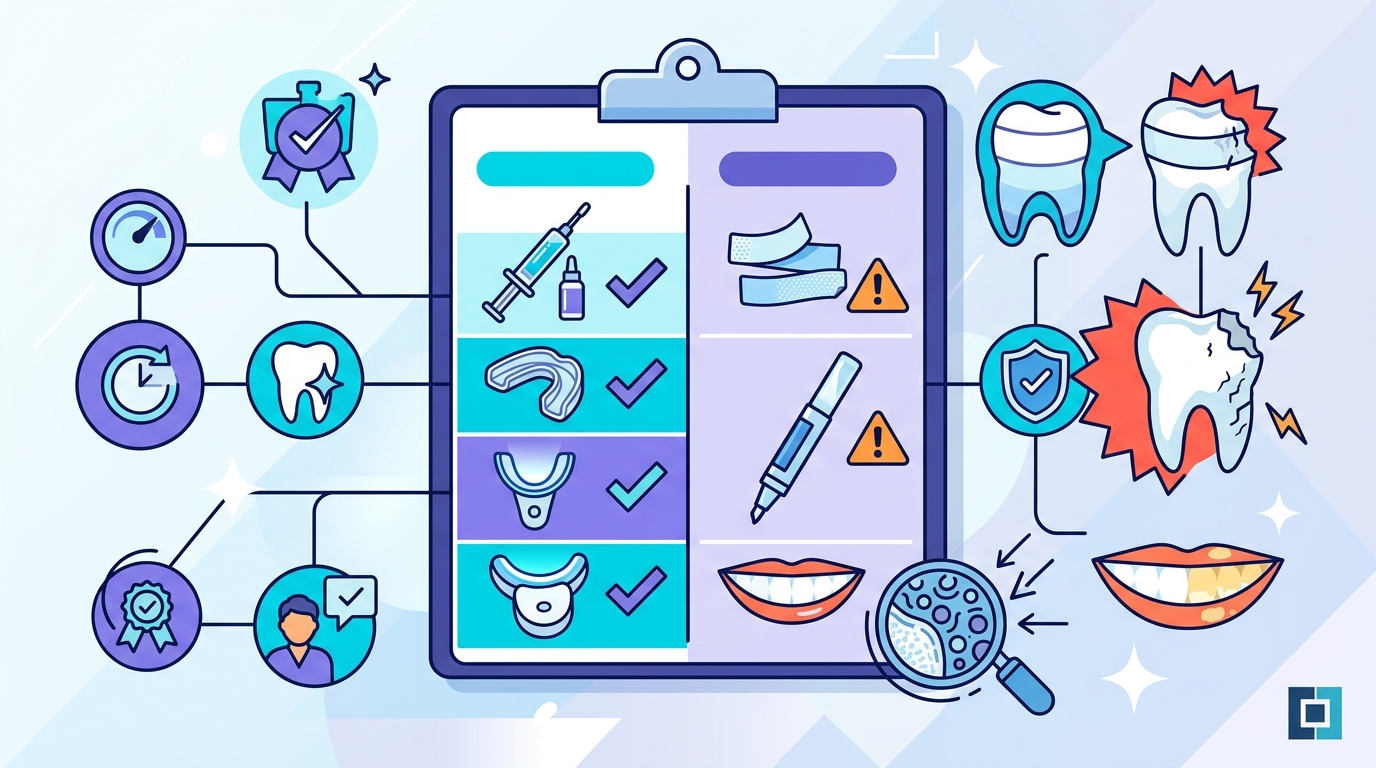
The landscape of teeth whitening is divided into professional, take-home, and over-the-counter categories. Each has distinct advantages regarding speed, cost, and customization. Professional in-office treatments offer the most dramatic results in a single visit, often using light activation to accelerate the chemical reaction. Take-home kits provided by dentists offer a balance of convenience and strength, allowing you to control the duration of exposure. Over-the-counter strips and trays are the most accessible but offer the least customization and weakest results.
| Treatment Type | Average Cost | Duration | Best For |
|---|---|---|---|
| In-Office Professional | $500 - $1,000 | 1 Visit (60-90 mins) | Immediate, dramatic results |
| Dentist-Provided Take-Home | $300 - $600 | 1-2 Weeks | Gradual, customized whitening |
| Over-the-Counter Strips | $20 - $50 | 1-4 Weeks | Mild staining, budget-conscious |
| LED Light Kits | $50 - $150 | Varies | Enhanced at-home results |
In-Office Procedures
In-office treatments are supervised by dentists who apply a high-concentration gel and often use a specialized light to activate it. This method is ideal for those who need immediate results for special events. The Edhak Center offers comprehensive cosmetic evaluations to determine if you are a candidate for these advanced procedures. Visit our Cosmetic Dentistry Services page to learn more about our in-office protocols.
Take-Home Kits
Dentist-supervised take-home kits involve custom-fitted trays and professional-grade gel. This approach allows for gradual whitening, which often results in less sensitivity. It is a popular choice for maintaining long-term brightness. You can explore our Take-Home Whitening Options to see how we tailor these kits to your specific dental anatomy.
Consulting Dental Professionals
Self-diagnosing the cause of your tooth discoloration can lead to ineffective treatment. Stains can be extrinsic, caused by food and drink, or intrinsic, resulting from trauma or medication. A professional examination is necessary to rule out cavities, gum disease, or cracked teeth before whitening. Whitening does not work on crowns, veneers, or fillings, which may lead to uneven coloration if not addressed beforehand. Schedule a consultation at Edhak Center to ensure your smile is healthy enough for whitening.
Furthermore, dental professionals can recommend the appropriate shade goal. Aiming for an unnaturally white shade can look artificial and may require more aggressive treatment than your teeth can tolerate. A natural, harmonious shade enhances your overall appearance without compromising dental health. For more insights on cosmetic dentistry, read our article on The Benefits of Cosmetic Dentistry.
Maintenance and Longevity
Teeth whitening is not permanent. The longevity of your results depends on your lifestyle habits and oral hygiene routine. According to recent dental studies, results can last from six months to three years, depending on consumption of staining agents like coffee, tea, and red wine. Maintaining your results requires regular brushing, flossing, and occasional touch-ups. We recommend scheduling regular cleanings at General Dentistry Services to remove surface stains and keep your enamel strong.
Using a straw for dark beverages can minimize contact between the liquid and your teeth. Additionally, avoiding tobacco products is crucial, as nicotine and tar are potent staining agents. If you are considering long-term cosmetic improvements, you might also explore Porcelain Veneers for a more permanent solution to discoloration and shape issues.
Key Takeaways
- Professional Supervision is Critical: Always consult a dentist to ensure your teeth are healthy enough for whitening and to prevent enamel damage.
- Sensitivity Management: Choose lower-concentration peroxides or carbamide peroxide if you have sensitive teeth to minimize nerve irritation.
- Realistic Expectations: Whitening does not work on restorations like crowns or fillings, and results vary based on the type of staining.
- Lifestyle Impact: Diet and habits significantly affect longevity; reducing intake of coffee, tea, and tobacco extends results.
- Customization Matters: Custom-fitted trays provided by dentists ensure even application and reduce gum irritation compared to one-size-fits-all strips.
- Cost vs. Value: In-office treatments offer immediate results but cost more, while take-home kits provide a balance of convenience and efficacy.
- Maintenance Routine: Regular dental cleanings and good oral hygiene are essential for preserving your whitened smile over time.
Frequently Asked Questions
How long does teeth whitening last?
Results typically last between six months and three years, depending on your diet and oral hygiene habits. Regular touch-ups and professional cleanings can extend this period significantly.
Is teeth whitening safe for sensitive teeth?
Yes, but you must choose the right product. Dentist-supervised take-home kits with desensitizing agents are often the safest option for individuals with sensitive teeth.
Can I whiten my teeth if I have crowns or veneers?
No, whitening agents do not change the color of porcelain or composite restorations. You may need to replace your crowns or veneers to match your newly whitened natural teeth.
What is the difference between hydrogen peroxide and carbamide peroxide?
Carbamide peroxide breaks down into hydrogen peroxide and urea. It releases peroxide more slowly, which can reduce sensitivity and is often preferred for take-home kits.
How much does professional teeth whitening cost?
In-office professional whitening typically costs between $500 and $1,000, while dentist-supervised take-home kits range from $300 to $600. Prices vary based on the extent of treatment required.
Are over-the-counter whitening strips effective?
They can be effective for mild staining but offer less customization and weaker results compared to professional treatments. They also carry a higher risk of uneven application.
How often should I get my teeth whitened?
Most dentists recommend whitening only when necessary, typically once a year or every few years, to avoid damaging the enamel through overuse of peroxide.
Ready to Brighten Your Smile?
Selecting the right teeth whitening treatment requires a careful balance of efficacy, safety, and personal preference. Do not leave your smile to chance. Contact Edhak Center today to schedule a comprehensive cosmetic consultation. Our team will help you choose the perfect protocol for your unique dental needs and aesthetic goals.