

Approximately 75% of adults over age 34 have experienced some degree of jawbone loss, a condition that frequently complicates traditional dental implant placements. This statistic highlights why understanding bone density is not just a technical detail but a primary determinant of long-term oral health success. When the jawbone lacks sufficient volume, standard implant protocols often fail, leading to costly revisions and prolonged recovery times. At EDHAK Center, we prioritize precise diagnostic imaging to identify these structural deficits before any surgical intervention begins. By addressing bone deficiency early, patients can avoid the most common pitfalls associated with thin jawbone scenarios. This guide outlines the essential strategies for ensuring implant stability and longevity in challenging anatomical conditions.
Mistake 1: Inadequate Pre-Surgical Imaging and Diagnosis
The most critical error patients face is proceeding with implant planning based solely on 2D panoramic X-rays. While traditional X-rays provide a flat view of the jaw, they fail to reveal the three-dimensional contours of the bone. This lack of depth perception can lead to the placement of implants too close to vital structures, such as the inferior alveolar nerve or the maxillary sinus. Precise 3D CBCT imaging is the non-negotiable standard for thin jawbone cases. This technology allows specialists to measure bone width, height, and density with millimeter accuracy. Without this data, the risk of implant failure increases significantly due to poor primary stability. At EDHAK Center, our diagnostic protocol ensures that every patient receives a tailored surgical plan based on their unique anatomical landscape. For more details on our diagnostic approach, visit our Dental Services page.
Mistake 2: Ignoring the Need for Bone Augmentation
Many patients attempt to avoid bone grafting due to cost or fear of additional surgery. However, skipping this step when the jawbone is too thin is a fundamental mistake. Bone grafting is not merely an optional add-on; it is a foundational requirement for creating a stable base for the implant. Without sufficient bone volume, the implant cannot achieve osseointegration, the process where the bone fuses with the titanium post. Bone grafting is the surgical procedure of adding bone or bone-like material to the jaw to increase volume. This process can take several months to complete, which is why early intervention is crucial. Delaying this treatment often leads to further bone resorption, making future restoration more complex. Our team at EDHAK Center specializes in advanced regenerative techniques to ensure your bone structure is robust enough to support your new smile.
Mistake 3: Choosing Standard Implants for Narrow Ridges
Using standard-diameter implants in a narrow jawbone is a recipe for mechanical failure. Standard implants require a minimum amount of surrounding bone to distribute chewing forces effectively. When placed in thin bone, these implants can exert excessive pressure on the cortical plate, leading to bone loss around the implant site. Narrow-diameter implants are specialized prosthetic devices designed for areas with limited bone width. These implants, often referred to as mini-implants, require less bone volume and can sometimes eliminate the need for extensive grafting. However, they are not suitable for all posterior teeth due to higher stress concentrations. The decision between standard and narrow implants must be made by a specialist who understands biomechanical load distribution. You can explore our Team of specialists to see who is best suited for your specific case.
Mistake 4: Rushing the Osseointegration Phase
Patience is a critical component of successful implant therapy, especially for those with thin jawbones. The healing period allows the bone to grow around the implant fixture, creating a secure anchor. Rushing this process by placing a temporary crown too early or engaging in heavy chewing can disrupt this delicate biological integration. Osseointegration is the direct structural and functional connection between living bone and the surface of a load-carrying implant. In thin bone, this process may take longer than the standard three to six months. Premature loading can cause micromovement, which prevents bone fusion and leads to implant loosening. Our Dental FAQ section provides detailed timelines for healing based on individual bone quality.
Mistake 5: Neglecting Post-Operative Bone Preservation
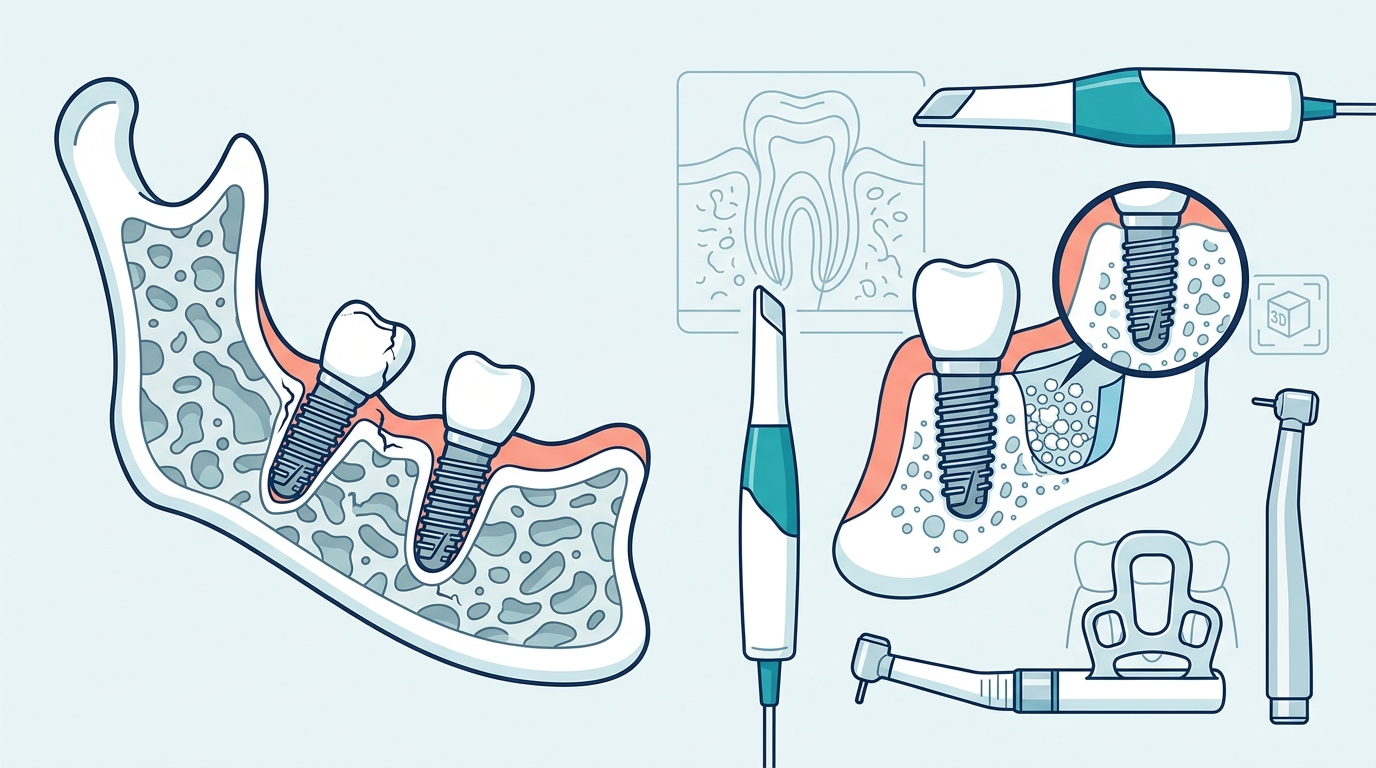
The final mistake occurs after the implant is placed. Many patients forget that the surrounding bone requires ongoing care to prevent resorption. Poor oral hygiene, smoking, and uncontrolled diabetes can all compromise the health of the bone around the implant. Peri-implantitis is an inflammatory condition affecting the soft and hard tissues around dental implants. This condition can lead to rapid bone loss and eventual implant failure if not treated promptly. Regular maintenance visits are essential to monitor bone levels and gum health. At EDHAK Center, we provide comprehensive post-operative care plans to ensure your investment in dental health is protected for the long term. See our Before & After Gallery to view successful outcomes of complex cases.
Key Takeaways
- Diagnostic Accuracy: 3D CBCT imaging is essential for evaluating thin jawbone volume and avoiding nerve damage.
- Bone Augmentation: Bone grafting is often required to create sufficient volume for implant stability in deficient ridges.
- Implant Selection: Narrow-diameter implants may be a viable alternative to grafting in cases of severe bone loss.
- Healing Time: Osseointegration may require extended healing periods for patients with compromised bone density.
- Post-Op Care: Preventing peri-implantitis through rigorous hygiene and regular check-ups is critical for long-term success.
- Specialist Expertise: Complex cases require specialists with advanced training in regenerative dentistry.
- Early Intervention: Addressing bone loss early prevents further resorption and simplifies future restorative options.
Frequently Asked Questions
Can I get dental implants if my jawbone is too thin?
Yes, it is possible to receive dental implants even with thin jawbone. However, the procedure often requires additional steps such as bone grafting or the use of narrow-diameter implants to ensure stability and success.
What is the success rate of implants in thin bone?
With proper planning and advanced techniques like bone augmentation, the success rate for implants in thin bone is comparable to that of healthy bone. The key is precise diagnosis and careful surgical execution.
How long does bone grafting take to heal?
Bone grafting typically requires a healing period of three to six months. During this time, the graft material integrates with your natural bone, creating a solid foundation for the implant.
Are mini-implants as strong as regular implants?
Mini-implants are strong enough for certain applications, particularly in the front of the mouth or for stabilizing dentures. However, they may not be suitable for posterior teeth where chewing forces are greater.
What happens if I ignore thin jawbone and get standard implants?
Ignoring bone deficiency can lead to implant failure, nerve damage, or sinus complications. The implant may not fuse properly, leading to loosening and the need for removal and revision surgery.
Does smoking affect implants in thin bone?
Smoking significantly increases the risk of implant failure, especially in patients with thin bone. It restricts blood flow and impairs the healing process, making bone grafting less effective.
How do I find a specialist for complex implant cases?
Look for specialists with advanced training in periodontics or oral surgery. Review their before-and-after galleries and consult with them to discuss your specific bone condition and treatment options.
Book Your Consultation
Do not let thin jawbone prevent you from restoring your smile. Early diagnosis and specialized care are the keys to avoiding common mistakes and ensuring long-term success. Contact EDHAK Center today to schedule your comprehensive evaluation. Our team is dedicated to providing personalized care that addresses your unique anatomical needs. Visit our Contact page to book your appointment and take the first step toward a confident, healthy smile.