

Yes, you can receive dental implants even with thin jawbones. Modern techniques like bone grafting and sinus lifts allow dentists to build sufficient bone volume for stable implant placement. This guide covers the specific surgical methods, specialized implant designs, and clinical assessments required to make this possible at EDHAK Center in Banha, Egypt.
Bone Grafting Techniques
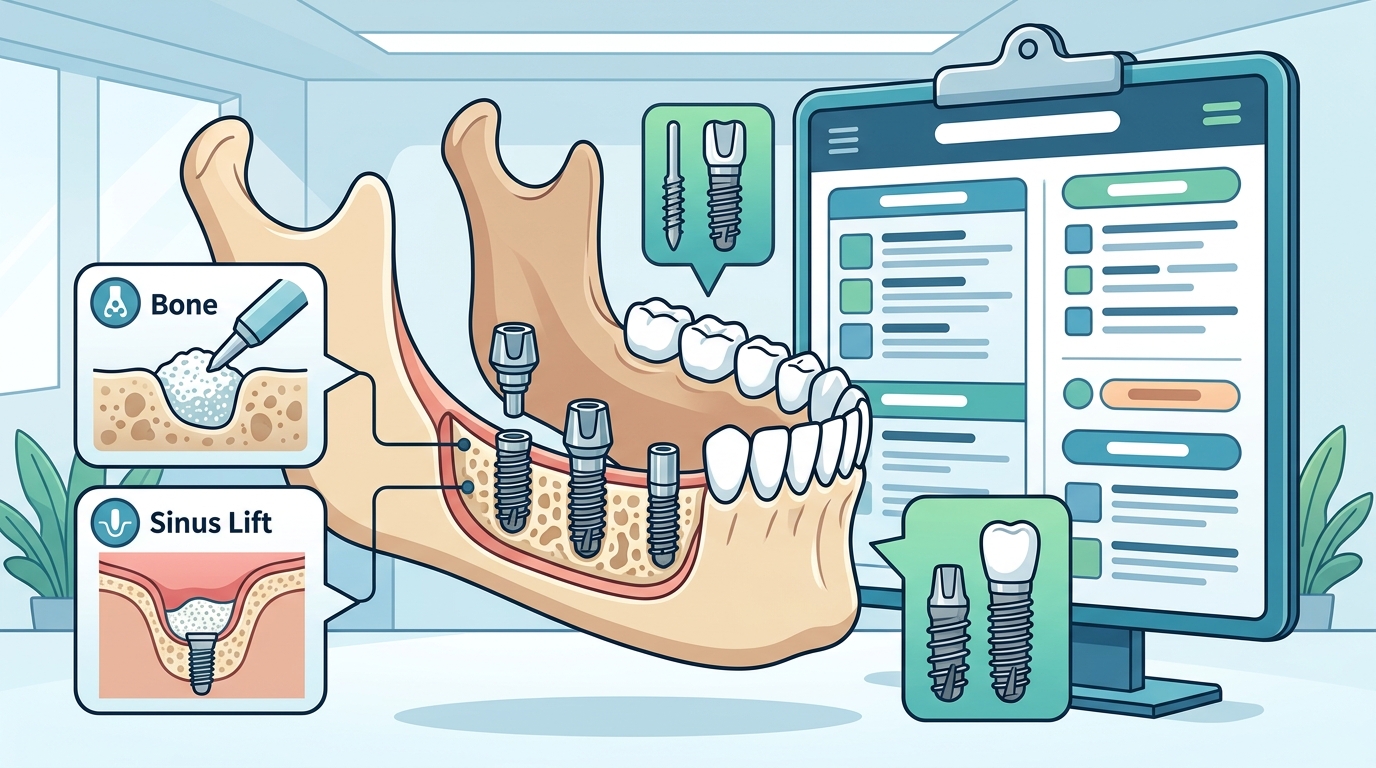
Thin jawbones are a common barrier to implant success, but they are rarely a permanent disqualification. Bone grafting is a surgical procedure that adds volume to the jawbone to support an implant. When natural bone resorption occurs after tooth loss, the jawbone shrinks in width and height. Grafting reverses this process by stimulating new bone growth.
Types of Grafting Materials
Dentists use several types of materials to rebuild bone. Autografts use bone harvested from another part of the patient's body, such as the chin or hip. Allografts use donor bone from a tissue bank. Xenografts use animal-derived bone, typically from cows, which is processed to be safe for human use. Alloplasts are synthetic materials made from calcium compounds. Each option has different healing times and success rates, and the choice depends on the size of the defect.
Guided Bone Regeneration
Guided bone regeneration (GBR) is a technique that uses a barrier membrane to protect the graft site. The membrane prevents soft tissue from growing into the bone defect while the new bone forms. This method is highly effective for narrow ridges where the bone width is insufficient for standard implants. At EDHAK Center, our implantologists evaluate the specific geometry of your jaw to determine if GBR is necessary.
Sinus Lift Procedures
The upper jaw often presents a unique challenge due to the proximity of the maxillary sinus. Sinus lift is a procedure that adds bone to the upper jaw by lifting the sinus membrane and placing graft material underneath. This is essential when the bone height in the upper molar area is too low for a standard implant.
Internal vs. External Sinus Lifts
There are two main approaches to sinus augmentation. An internal (transcrestal) sinus lift is performed through the same site as the implant placement. It is suitable for patients with at least 4mm of existing bone height. An external (lateral window) sinus lift involves creating a small window in the bone wall to access the sinus cavity. This approach allows for more significant bone addition and is used when bone height is severely deficient.
Healing and Integration
After a sinus lift, the graft material must integrate with the existing bone. This process typically takes 4 to 9 months. During this time, the new bone matures and becomes dense enough to support an implant. Some cases allow for immediate implant placement during the lift procedure, but this depends on the stability of the implant and the quality of the bone. Our team at EDHAK Center uses 3D imaging to plan the lift precisely, minimizing trauma and ensuring optimal graft placement.
Specialized Implant Designs
Not all implants are created equal. When bone volume is limited, the choice of implant design becomes critical. Specialized implant designs are engineered to maximize primary stability in narrow or low-density bone. These designs reduce the need for extensive grafting in some cases.
Narrow-Diameter Implants
Narrow-diameter implants are smaller in width than standard implants. They are ideal for the anterior (front) region of the mouth, where the bone is often naturally thinner. These implants can be placed in areas where a standard implant would not fit without grafting. They provide a stable foundation for single crowns and are a viable option for patients with mild bone deficiency.
Short Implants
Surface Treatments
The surface texture of an implant affects how quickly it bonds with bone. Implants with roughened or textured surfaces promote faster osseointegration. This is crucial in thin bone, where the healing environment is less favorable. Modern implants feature hydrophilic surfaces that attract bone cells, accelerating the integration process. Our implantologists at EDHAK Center select implants based on the specific bone quality and quantity present in your jaw.
Clinical Assessment Requirements
Before any implant treatment can begin, a thorough clinical assessment is mandatory. This evaluation determines whether your jawbone can support an implant and what preparatory procedures are needed. Clinical assessment involves a combination of physical examination, imaging, and medical history review.
3D CBCT Imaging
Computed Tomography (CBCT) scans provide a 3D view of your jawbone. This imaging is essential for measuring bone width, height, and density. It also reveals the location of vital structures like nerves and sinuses. At EDHAK Center, we use CBCT scans to plan implant placement with millimeter precision. This technology allows us to simulate the surgery before it happens, ensuring the safest and most effective outcome.
Medical History and Risk Factors
Your overall health plays a significant role in implant success. Conditions like diabetes, osteoporosis, and smoking can affect bone healing. Your dentist will review your medical history to identify any risk factors that might complicate the procedure. In some cases, managing these conditions before surgery is necessary to ensure a successful outcome. We work closely with your primary care provider to coordinate your care.
Diagnostic Workup
A complete diagnostic workup includes a clinical exam, X-rays, and a review of your dental history. This helps identify any existing dental issues that need to be addressed before implant placement. For example, if you have active gum disease, it must be treated first to prevent infection around the implant. Our team at EDHAK Center provides a comprehensive treatment plan that addresses all aspects of your oral health.
Key Takeaways
- Thin jawbones do not automatically disqualify you from dental implants.
- Bone grafting can rebuild lost bone volume to support implants.
- Sinus lifts are essential for upper jaw implants in areas with low bone height.
- Specialized implant designs, such as narrow and short implants, can reduce the need for grafting.
- 3D CBCT imaging is critical for precise treatment planning in complex cases.
- Medical conditions like diabetes and smoking can affect bone healing and implant success.
- A comprehensive clinical assessment is required before any implant surgery.
- EDHAK Center in Banha offers advanced implant solutions for patients with thin jawbones.
Frequently Asked Questions
Can I get implants if my jawbone is too thin?
Yes, in most cases. Bone grafting techniques can build up the jawbone to provide a stable foundation for implants. The specific approach depends on the severity of the bone loss.
How long does bone grafting take to heal?
Healing time varies depending on the type of graft and the size of the defect. It typically takes 4 to 9 months for the graft to integrate fully with the existing bone.
Is a sinus lift painful?
The procedure is performed under local anesthesia, so you will not feel pain during the surgery. Some discomfort and swelling are normal after the procedure, but this can be managed with pain medication.
Do I need a bone graft for every implant?
No, not every patient needs a bone graft. If you have sufficient bone volume and density, a standard implant can be placed without grafting. A CBCT scan will determine if grafting is necessary.
What is the success rate of implants in thin bone?
With proper planning and execution, the success rate of implants in thin bone is high. Modern techniques and specialized implant designs have significantly improved outcomes for these cases.
Can I eat normally after a sinus lift?
You will need to follow a soft diet for the first few days after the procedure. Avoiding hard or crunchy foods helps protect the graft site while it heals.
How much does a bone graft cost?
The cost of a bone graft varies depending on the type of material used and the complexity of the case. At EDHAK Center, we provide a detailed treatment plan and cost estimate after your consultation.
Is smoking a contraindication for implants?
Smoking can negatively affect bone healing and increase the risk of implant failure. While it is not an absolute contraindication, quitting smoking before and after surgery is strongly recommended.
Conclusion
Having thin jawbones does not mean you have to give up on dental implants. With advanced techniques like bone grafting and sinus lifts, along with specialized implant designs, it is possible to achieve a stable and functional smile. The key is a thorough clinical assessment and a personalized treatment plan. At EDHAK Center in Banha, our team of experienced implantologists is dedicated to helping you overcome bone deficiencies and achieve the smile you deserve. Book your consultation today to discuss your options.