
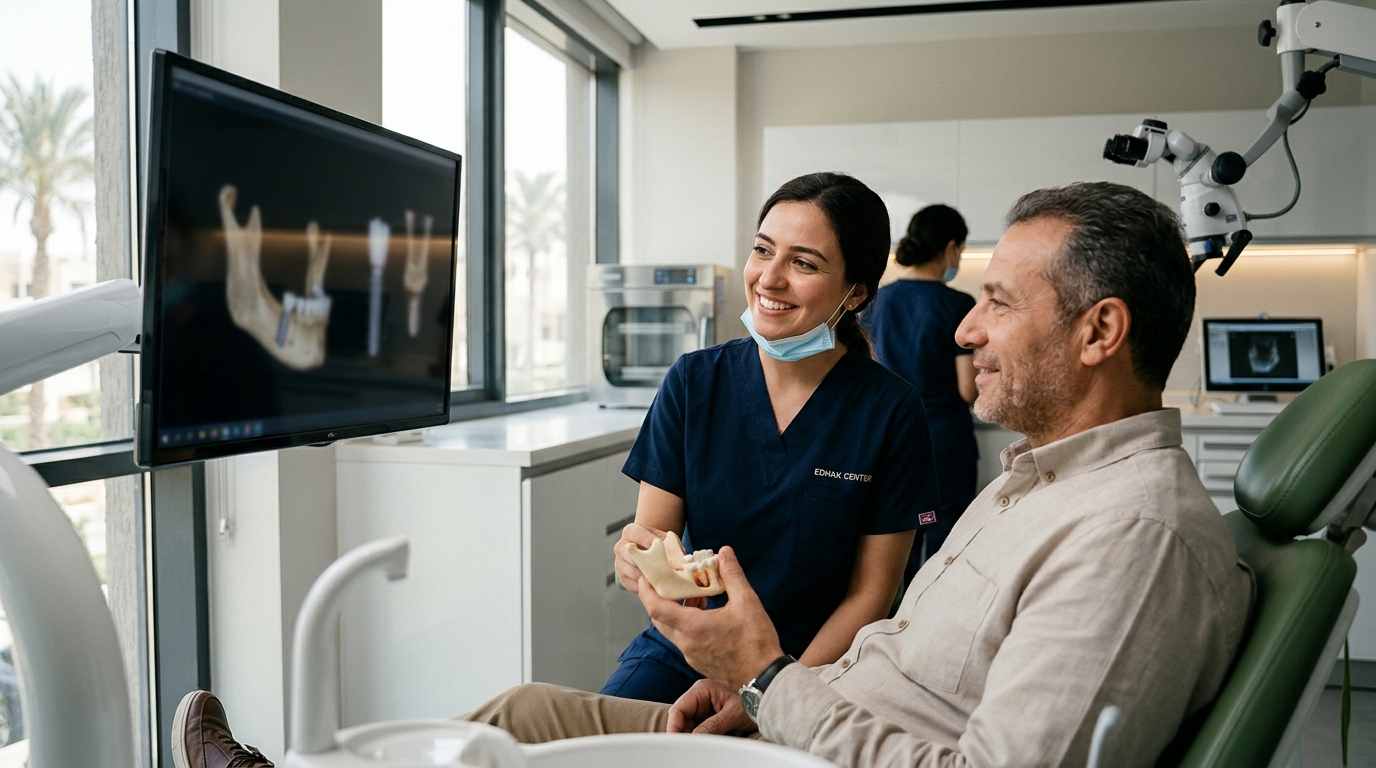
Insufficient jawbone density is a common barrier to successful dental implant placement. Bone grafting is a surgical procedure that rebuilds lost bone tissue to create a stable foundation for implants. At EDHAK Center in Banha, Egypt, Dr. Moosa and his team utilize advanced techniques to restore bone volume safely. Understanding the different grafting methods helps patients make informed decisions about their oral health journey.
1. Autogenous Bone Grafts
Autogenous grafts use the patient's own bone, offering the highest success rate for integration. This method involves harvesting bone from another part of the patient's body, such as the chin, hip, or knee. Because the tissue is biologically identical to the recipient site, it promotes rapid healing and new bone formation. While this approach requires a second surgical site, it remains the gold standard for large-scale bone reconstruction in complex cases. For additional details, review the Dental Services EDHAK Center.
2. Allografts
3. Xenografts
Xenografts are derived from animal sources, most commonly bovine (cow) bone, and are highly biocompatible. The mineral structure of bovine bone closely resembles human bone, making it an excellent scaffold for regeneration. This type of graft is often used in conjunction with other materials to enhance stability. Its slow resorption rate allows for gradual replacement with the patient's native bone over time. For additional details, review the Family amp Pediatric Dentistry.
4. Alloplasts
Alloplasts are synthetic materials designed to mimic the properties of natural bone. These grafts are made from laboratory-created substances such as hydroxyapatite or calcium phosphate. They provide a stable framework for new bone growth without the risk of disease transmission associated with biological materials. Alloplasts are often used in smaller defects where a predictable and consistent healing process is desired. For additional details, review the Terms of Service EDHAK.
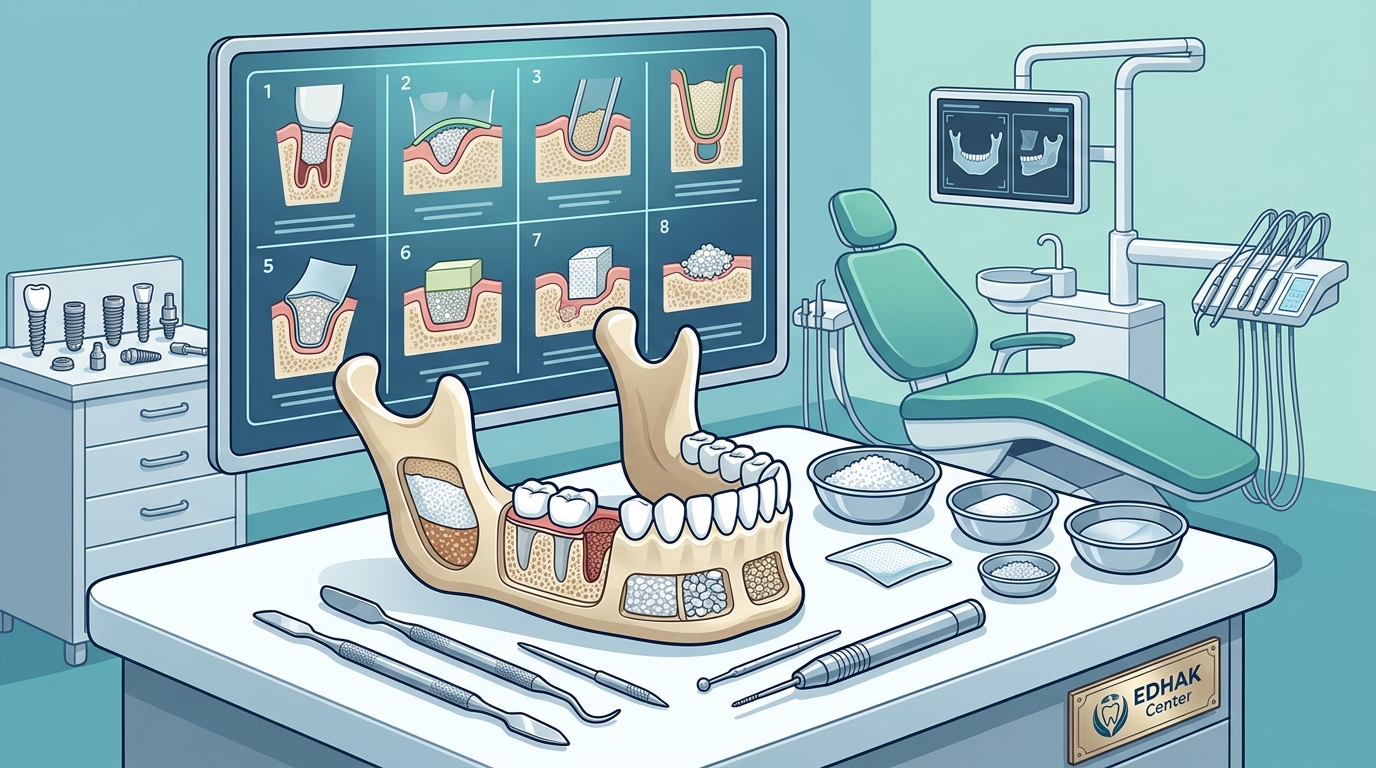
5. Guided Bone Regeneration
6. Sinus Lifts
7. Ridge Augmentation
Choosing the Right Procedure
Selecting the appropriate bone grafting method depends on the extent of bone loss, the location of the implant, and the patient's overall health. At EDHAK Center, Dr. Moosa evaluates each patient's unique anatomy using advanced imaging to recommend the most effective solution. Whether you need a simple ridge augmentation or a complex sinus lift, the right choice ensures long-term implant success. To discuss your options, for a personalized consultation.
Frequently Asked Questions
How long does bone grafting take to heal?
Healing times vary by procedure, typically ranging from 3 to 6 months. The body needs time to integrate the graft material and form new, dense bone. Your dentist will monitor progress with X-rays before placing the implant.
Is bone grafting painful?
The procedure is performed under local anesthesia or sedation, so you will not feel pain during surgery. Post-operative discomfort is usually manageable with prescribed pain medication and similar to a tooth extraction.
Can I eat normally after a bone graft?
You will need to follow a soft food diet for several days to weeks. Avoiding hard, crunchy, or hot foods protects the surgical site and promotes proper healing. Your care team will provide specific dietary guidelines.
What is the success rate of bone grafting?
Success rates are generally high, often exceeding 90% when performed by an experienced specialist. Factors such as oral hygiene, smoking status, and overall health influence the outcome. Regular follow-up appointments are essential for monitoring integration.
Do I need a bone graft for every implant?
No, not every patient requires a graft. If you have sufficient bone density and volume, an implant can be placed directly. A clinical examination and 3D imaging will determine if grafting is necessary for your specific case.