

Dental implants are the most biologically compatible solution for replacing missing teeth, offering superior longevity and bone preservation compared to bridges or dentures. At EDHAK Center in Banha, Dr. Moosa and his team help patients evaluate these options based on bone density, budget, and long-term oral health goals. This guide breaks down the clinical differences to help you make an informed decision. according to Dental Implants What
Biological Integration and Bone Preservation
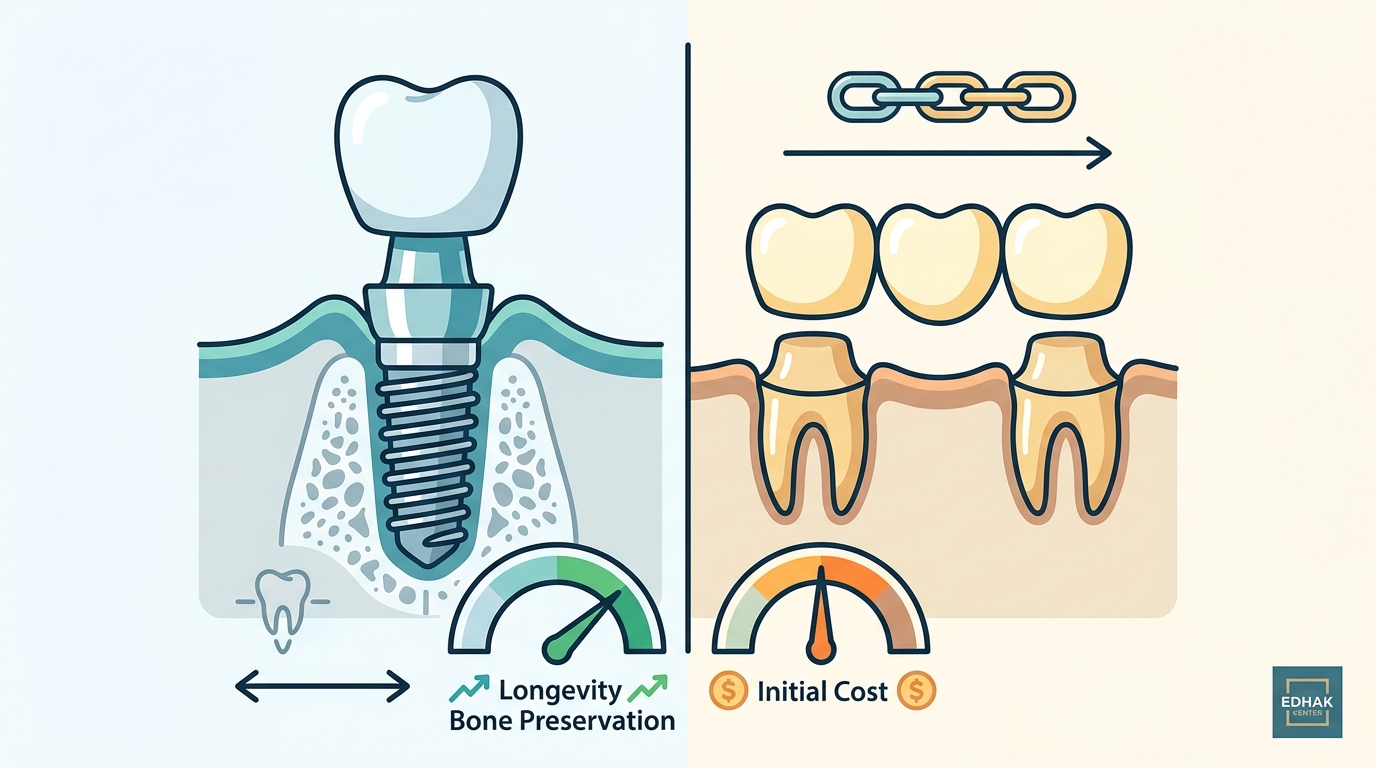
The primary advantage of a dental implant is osseointegration, a process where the titanium post fuses directly with the jawbone. Dental implant is a titanium post surgically placed into the jawbone to act as a root for a replacement tooth. This biological connection prevents the bone resorption that typically occurs when a tooth is lost. Without a tooth root to stimulate the bone, the jawbone begins to shrink, which can alter facial structure over time. For additional details, review the About EDHAK Center Our.
Functional Differences and Chewing Efficiency
Chewing efficiency is a key metric when comparing tooth replacement options. Implants function almost identically to natural teeth, allowing patients to eat a wide variety of foods without restriction. Chewing efficiency is the ability to break down food effectively using the teeth and jaw muscles. Studies indicate that implants restore chewing efficiency to levels close to that of natural dentition. This is because the implant is anchored securely in the bone, providing a stable base for the crown. For additional details, review the Dental Services EDHAK Center.
Removable dentures, on the other hand, can slip or shift during chewing, particularly when eating hard or sticky foods. This instability often leads patients to avoid certain foods, which can impact nutrition and quality of life. Bridges offer better stability than dentures but still rely on the strength of the supporting teeth. If the adjacent teeth are compromised, the entire bridge may be at risk. For active individuals in the Banha region, the stability of an implant often translates to a more confident and unrestricted diet. For additional details, review the Family amp Pediatric Dentistry.
Maintenance Requirements and Longevity
Longevity is a major factor in the cost-effectiveness of tooth replacement. Dental implants can last a lifetime with proper care, while other options have shorter expected lifespans. Longevity in dentistry is the duration a dental restoration remains functional and aesthetically acceptable. Implants require the same daily hygiene routine as natural teeth, including brushing and flossing. They do not require special adhesives or removal for cleaning, which simplifies the daily routine for many patients. For additional details, review the Terms of Service EDHAK.
Traditional bridges typically last between 10 and 15 years before they may need replacement due to decay in the supporting teeth or structural failure. Dentures may need to be relined or replaced every 5 to 7 years as the jawbone changes shape. While the initial investment in an implant is higher, the long-term durability often makes it a more economical choice over a patient's lifetime. At EDHAK Center, we emphasize that the longevity of an implant is closely tied to the patient's commitment to oral hygiene and regular professional check-ups.
Candidate Eligibility and Health Considerations
Not every patient is an immediate candidate for dental implants. Overall health and bone density play significant roles in determining eligibility. Candidate eligibility is the assessment of a patient's physical health and oral anatomy to determine suitability for a specific dental procedure. Conditions such as uncontrolled diabetes, heavy smoking, or severe bone loss can complicate the healing process. The U.S. Food and Drug Administration notes that overall health is an important factor in determining whether you are a good candidate for dental implants and how long it will take to heal according to FDA guidelines.
For patients with insufficient bone volume, bone grafting may be required before implant placement. This additional procedure adds time and cost but can make implant placement possible. Bridges and dentures, however, can often be placed without surgical intervention, making them viable alternatives for patients who are not surgical candidates. During a consultation at EDHAK Center, Dr. Moosa evaluates your medical history and oral anatomy to determine the most suitable treatment plan. This personalized approach ensures that the chosen solution aligns with your health status and long-term goals.
Cost Analysis and Investment Value
Key Takeaways
- Dental implants prevent bone loss by fusing with the jawbone, unlike bridges and dentures.
- With proper care, implants can last a lifetime, while bridges and dentures require periodic replacement.
- Overall health and bone density are critical factors in determining implant eligibility.
- Although implants have a higher initial cost, their longevity often makes them more cost-effective long-term.
- Consultation with a dental professional is essential to determine the best option for your specific needs.
Frequently Asked Questions
How long do dental implants last?
With proper care and regular dental check-ups, dental implants can last a lifetime. The crown on top of the implant may need replacement after 10 to 15 years, but the implant itself is designed to be a permanent solution.
Are dental implants painful?
The procedure is performed under local anesthesia, so you will not feel pain during the surgery. Most patients experience mild discomfort and swelling after the procedure, which can be managed with over-the-counter pain medication.
Can I get a dental implant if I have gum disease?
Gum disease must be treated and controlled before implant placement. Active infection can compromise the success of the implant. Your dentist will assess your gum health and recommend treatment if necessary.
How does an implant differ from a bridge?
An implant is a standalone tooth replacement that does not rely on adjacent teeth for support. A bridge requires the grinding down of adjacent healthy teeth to serve as anchors. Implants also preserve bone better than bridges.
What is the success rate of dental implants?
Dental implants have a high success rate, often exceeding 95% in healthy patients. Factors such as smoking, diabetes, and oral hygiene can influence the success rate.