
What Qualifications and Experience Should You Look for in an Egyptian Dental Specialist?
When choosing a dental specialist in Egypt, prioritize verified academic credentials, specific postgraduate training, and active professional memberships. Look for dentists who hold Master's degrees in their specific field, such as implantology or orthodontics, and who maintain ongoing education through recognized international fellowships. At EDHAK Center, our team exemplifies this standard by combining rigorous university training with specialized international certifications to ensure safe, high-quality care.
The Importance of Academic Foundations
A strong academic background is the baseline for any dental professional. In Egypt, dental education is highly structured, with graduates from major universities like Cairo University, Ain Shams University, and Tanta University forming the core of the country's dental workforce. However, a general dental degree is only the starting point. For complex procedures, you need a specialist who has completed advanced postgraduate studies.
International Certifications and Fellowships
While local degrees are essential, international certifications add a layer of global standardization to your care. Many top Egyptian dentists pursue fellowships or certifications from recognized international bodies to stay current with global best practices. These programs often involve rigorous clinical assessments and continuous professional development.
Look for memberships in organizations such as the International Congress of Oral Implantologists (ICOI) or the American Academy of Cosmetic Dentistry (AACD). For example, Dr. Mohamed Moosa, the founder of EDHAK Center, is a member of the International Federation of Esthetic Dentistry (IFED) and the AACD. Additionally, our implantologists hold fellowships from the Global Dental Implant Academy (FGDIA). These affiliations indicate that the specialist is committed to maintaining high ethical and technical standards that align with international benchmarks, not just local norms.
Clinical Experience and Case Volume
Qualifications on paper are important, but clinical experience is what determines your outcome. A specialist who has performed hundreds of specific procedures will have a higher success rate and a smoother recovery process for you. Experience is not just about years in practice; it is about the volume and complexity of cases handled.
When evaluating a specialist, ask about their specific case volume in your area of concern. For instance, if you are considering full-mouth rehabilitation, you want a dentist who has completed many such cases. At EDHAK Center, our endodontists, such as Dr. Mohamed Mansour, bring approximately 10 years of experience in complex micro-endodontic cases. This depth of experience means they are equipped to handle difficult root canal treatments with precision, using microscopes to navigate complex canal systems that might be missed by less experienced practitioners.
Technology and Modern Techniques
Modern dentistry relies heavily on technology to improve accuracy and patient comfort. A qualified specialist should be proficient in using digital tools such as 3D imaging, CAD/CAM systems, and digital scanning. These technologies allow for precise planning and execution of treatments, reducing the need for multiple visits and improving long-term results.
Digital Smile Design (DSD) is a prime example of this integration. It uses 3D imaging to plan your smile transformation before any treatment begins, allowing you to see the potential outcome. At EDHAK Center, we utilize digital dentistry to ensure that every procedure, from implants to veneers, is planned with precision. This approach minimizes guesswork and ensures that the final result matches the agreed-upon aesthetic and functional goals. A specialist who invests in and masters these technologies is better positioned to deliver predictable, high-quality results.

Patient-Centered Approach and Communication
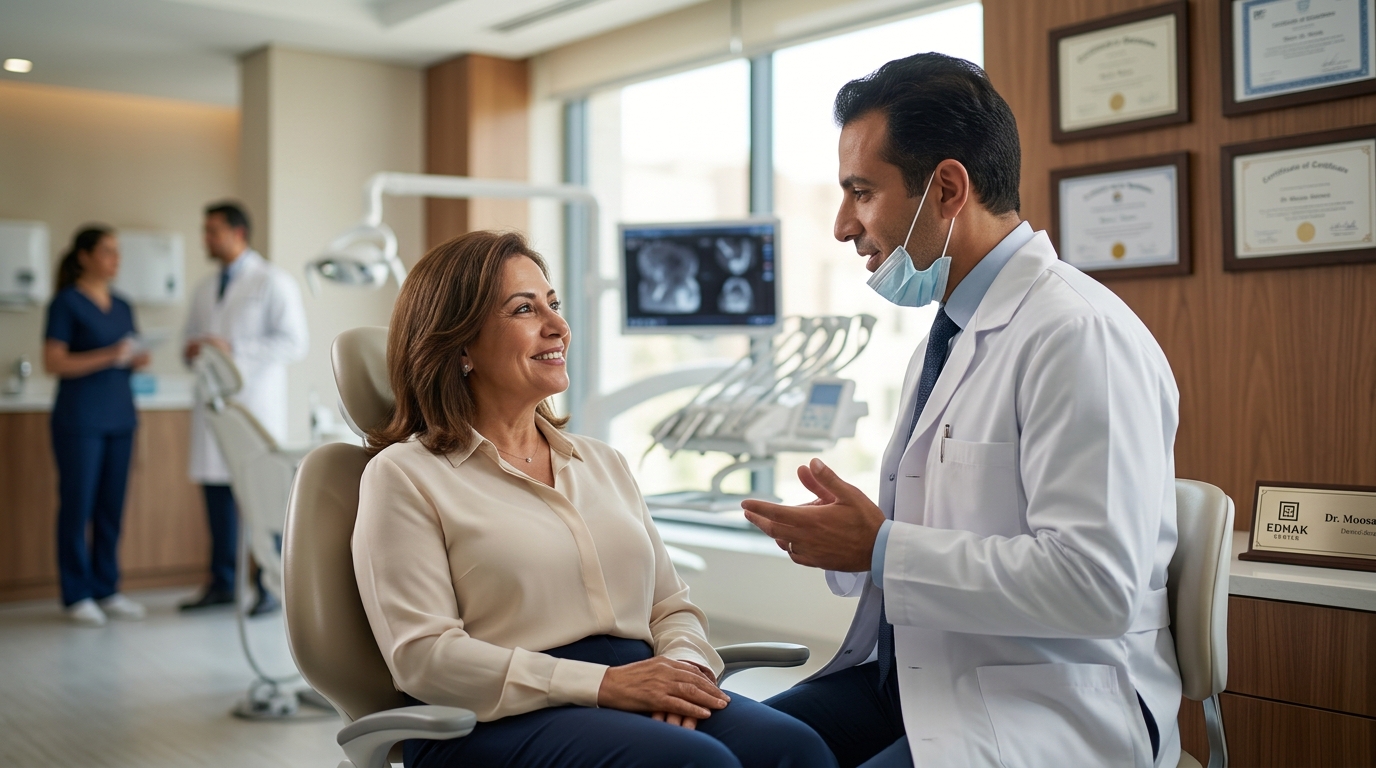
Technical skill is only half the equation; the other half is how the specialist communicates with you. A good dental specialist should be transparent about diagnoses, treatment options, and costs. They should listen to your concerns and tailor the treatment plan to your specific needs, lifestyle, and budget.
At EDHAK Center, we prioritize a patient-centered approach that emphasizes empathy and transparency. We explain diagnoses in plain language and present clear treatment options without pressure. This ensures that you feel informed and comfortable throughout your journey. When you visit a specialist, pay attention to how they explain their findings. Do they answer your questions thoroughly? Do they respect your autonomy in decision-making? These soft skills are just as important as their technical qualifications in ensuring a positive dental experience.
Key Takeaways
- Verify Postgraduate Degrees: Look for MSc or equivalent advanced degrees in the specific specialty you need, such as implantology or orthodontics.
- Check International Memberships: Affiliations with bodies like ICOI, AACD, or FGDIA indicate a commitment to global standards.
- Assess Case Volume: Ask about the number of specific procedures the specialist has performed to gauge their practical experience.
- Evaluate Technology Use: Ensure the clinic uses modern digital tools like 3D imaging and CAD/CAM for precise treatment planning.
- Prioritize Communication: Choose a specialist who explains options clearly, respects your input, and maintains transparency about costs.
- Review Team Expertise: Consider clinics with a multidisciplinary team, as complex cases often require input from multiple specialists.
Frequently Asked Questions
What is the difference between a general dentist and a specialist in Egypt?
A general dentist completes a five-year dental degree, while a specialist has completed additional postgraduate training, such as an MSc, in a specific field like orthodontics or implantology. Specialists are qualified to perform complex procedures that require advanced skills.
Do I need to check if a dentist is a member of an international organization?
While not mandatory, membership in recognized international organizations like the ICOI or AACD is a strong indicator of a dentist's commitment to high standards and ongoing education. It suggests they stay updated with global best practices.
How can I verify a dentist's qualifications in Egypt?
You can ask for copies of their degrees and certifications. Reputable clinics, such as EDHAK Center, display their team's credentials openly on their website, allowing you to verify their academic and professional background before your visit.
Is experience more important than qualifications?
Both are important, but they complement each other. Qualifications provide the theoretical foundation, while experience ensures practical proficiency. Ideally, you want a specialist who has both strong academic credentials and a high volume of successful cases in their specialty.
What role does technology play in a specialist's qualifications?
Proficiency in modern dental technology, such as digital scanning and 3D imaging, is increasingly considered part of a specialist's skill set. It allows for more precise diagnosis and treatment planning, leading to better outcomes and greater patient comfort.
Conclusion
Choosing the right dental specialist in Egypt requires looking beyond marketing claims and focusing on verifiable credentials and experience. By prioritizing postgraduate degrees, international memberships, and a patient-centered approach, you can ensure that you receive the highest standard of care. At EDHAK Center, we are committed to meeting these standards, offering a team of highly qualified specialists dedicated to your oral health and aesthetic goals. To discuss your specific needs and review our team's qualifications, contact our team today.