

Choosing the right dental care provider is a critical decision that impacts long-term health and financial stability. According to recent industry reports, over 47% of adults admit to delaying necessary dental visits due to cost concerns or lack of clear information about available services. This hesitation often leads to more complex and expensive treatments down the line. Understanding the differences between general dentistry, specialized care, and cosmetic enhancements is essential for making a proactive choice. This guide breaks down the key variables to consider when evaluating your options.
General Dentistry vs. Specialist Care
The first step in comparing dental care options is understanding the scope of practice. General dentistry serves as the foundation for oral health, focusing on prevention, diagnosis, and routine treatment. General dentistry is the primary branch of dentistry that focuses on maintaining overall oral health through regular check-ups and basic procedures. This includes cleanings, fillings, and root canals. For most patients, a general dentist is the first point of contact and the coordinator of their long-term care plan.
Specialist care, on the other hand, involves dentists who have completed additional years of training in specific areas. These specialists handle complex cases that fall outside the scope of general practice. For example, an orthodontist focuses exclusively on teeth alignment, while an endodontist specializes in the interior of the tooth, particularly the pulp. Consulting with a specialist is often necessary when a condition requires advanced intervention. You can learn more about the specific roles of our specialists by visiting our Team page.
Understanding this distinction helps patients avoid unnecessary referrals or, conversely, delays in receiving specialized care. A comprehensive approach often involves a general dentist working in tandem with specialists to ensure the best outcome. This collaborative model is standard in high-quality practices like EDHAK Center, where patient needs dictate the care pathway.
Comparing Treatment Modalities
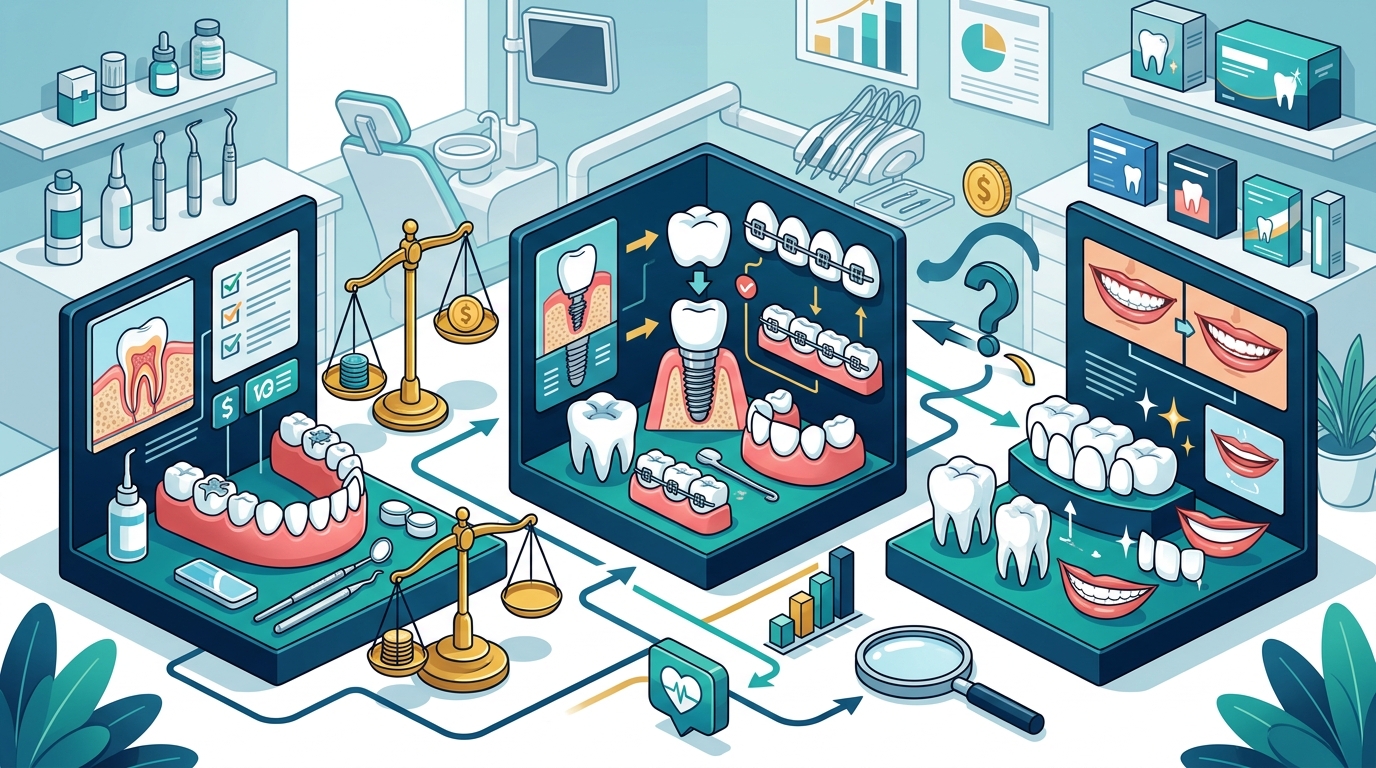
Once you have identified the type of provider, the next comparison involves the specific treatments available. Modern dentistry offers a wide array of modalities, from traditional restorative work to advanced cosmetic procedures. Cosmetic dentistry is the branch of dentistry focused on improving the appearance of teeth, gums, and bite. This category includes veneers, whitening, and bonding, which are increasingly popular for patients seeking aesthetic improvements.
Restorative dentistry remains the core of clinical practice. This includes crowns, bridges, and implants. Dental implants, for instance, are titanium posts surgically placed into the jawbone to replace missing teeth. They offer a permanent solution that mimics the function of natural teeth. In contrast, dentures are removable appliances that can replace missing teeth. The choice between implants and dentures often depends on bone density, budget, and personal preference.
Preventive care is another critical category. This includes professional cleanings, fluoride treatments, and sealants. While often overlooked, preventive care is the most cost-effective option in the long run. It stops minor issues from becoming major problems. For a visual reference of our work, you can view our Before & After Gallery to see the results of various treatment modalities.
Cost Structures and Insurance
Cost is a significant factor in comparing dental care options. Prices vary widely based on the complexity of the procedure, the provider's expertise, and the geographic location. Health insurance is a system that provides financial coverage for medical expenses, including dental care, in exchange for premiums. Understanding your policy is crucial for managing out-of-pocket costs.
Many insurance plans categorize services into preventive, basic, and major categories. Preventive care, such as cleanings and exams, is often covered at 100%. Basic procedures, like fillings, might be covered at 80%. Major procedures, such as crowns and implants, typically have lower coverage percentages, often around 50%. This tiered structure means that patients must plan for significant out-of-pocket expenses for complex treatments.
For patients without insurance, many clinics offer payment plans or membership programs. These programs can provide discounted rates for routine care and priority scheduling. It is important to ask about these options during your initial consultation. Transparent pricing is a hallmark of reputable practices. You can find more details on our policies by visiting our FAQ page.
The Role of Modern Technology
Technology has revolutionized the comparison of dental care options. Advanced diagnostic tools allow for more accurate and less invasive treatments. Digital X-rays, for example, use up to 90% less radiation than traditional film X-rays. This makes them safer for patients, especially children and pregnant women.
Intraoral cameras allow dentists to show patients exactly what is happening in their mouth. This visual aid improves patient understanding and consent. Laser dentistry is another technological advancement that offers precise tissue removal with minimal discomfort and faster healing times. These technologies are not just gimmicks; they improve clinical outcomes and patient comfort.
When comparing providers, ask about the technology they use. A practice that invests in modern equipment is likely to provide more efficient and accurate care. At EDHAK Center, we prioritize the integration of the latest dental technologies to ensure the highest standard of care for our patients.
How to Choose the Right Provider
Selecting the right dental provider involves evaluating several factors. Experience, credentials, and patient reviews are all important indicators of quality. It is also essential to consider the provider's approach to patient care. Do they listen to your concerns? Do they explain options clearly? A good dentist acts as a partner in your health journey.
Location and accessibility are practical considerations. A clinic that is easy to reach and has convenient hours is more likely to encourage regular visits. This is particularly important for families with busy schedules. Additionally, the office environment should be clean, comfortable, and welcoming. A positive environment reduces anxiety and improves the overall experience.
Finally, consider the range of services offered. A practice that offers a comprehensive range of services, from general to cosmetic, can address all your needs under one roof. This convenience can save time and money. You can explore our full range of services on our Services page.
Key Takeaways
- Preventive Care is Cost-Effective: Regular check-ups and cleanings can prevent expensive restorative work later.
- Specialists Handle Complex Cases: Orthodontists and endodontists provide targeted expertise for specific conditions.
- Technology Improves Outcomes: Digital X-rays and lasers offer safer, more precise treatments.
- Insurance Tiers Matter: Understand your coverage levels for preventive, basic, and major procedures.
- Provider Experience is Critical: Look for credentials, reviews, and a collaborative approach to care.
- Comprehensive Care Saves Time: A practice offering multiple services can streamline your dental health journey.
- Transparency Builds Trust: Clear pricing and open communication are signs of a reputable clinic.
Frequently Asked Questions
What is the difference between a general dentist and a specialist?
A general dentist provides comprehensive oral health care, including cleanings, fillings, and basic extractions. A specialist has additional training in a specific area, such as orthodontics or periodontics, and handles complex cases.
How often should I visit the dentist?
Most dental professionals recommend visiting every six months for a check-up and cleaning. However, individuals with specific conditions may need more frequent visits.
Are dental implants covered by insurance?
Coverage varies by plan. Many insurance plans cover a portion of implant costs, often categorizing them as major restorative work. It is best to check your specific policy details.
What is cosmetic dentistry?
Cosmetic dentistry focuses on improving the appearance of teeth and gums. Common procedures include veneers, whitening, and bonding.
How do I choose the right dental clinic?
Consider factors such as location, provider credentials, patient reviews, available technology, and the range of services offered. A consultation can help you assess comfort and communication style.
Is laser dentistry painful?
Laser dentistry is generally less painful than traditional methods. It often reduces the need for anesthesia and speeds up healing time.
What should I bring to my first appointment?
Bring your insurance card, a list of current medications, and any relevant medical history. Being prepared helps the dentist provide accurate care.
Schedule Your Consultation
Taking control of your oral health starts with a single step. By understanding the differences between dental care options, you can make informed decisions that benefit your long-term well-being. Whether you need routine care, specialized treatment, or cosmetic enhancements, finding the right provider is essential. Contact EDHAK Center today to schedule your appointment and experience professional dental care in Egypt. Our team is dedicated to providing personalized, high-quality service tailored to your unique needs.