

Tooth loss and severe decay affect millions of people globally, creating gaps that compromise both oral health and self-confidence. According to recent epidemiological data, nearly 120 million adults in the United States are missing at least one tooth, a statistic that highlights the widespread need for effective restorative solutions. When a tooth is damaged beyond repair or lost entirely, the structural integrity of the entire jaw begins to deteriorate. This guide explores the critical differences between dental crowns and bridges, helping you understand which path aligns with your clinical needs. At EDHAK Center in Banha, we prioritize preserving your natural tooth structure while ensuring long-term functional stability.
What Is a Dental Crown?
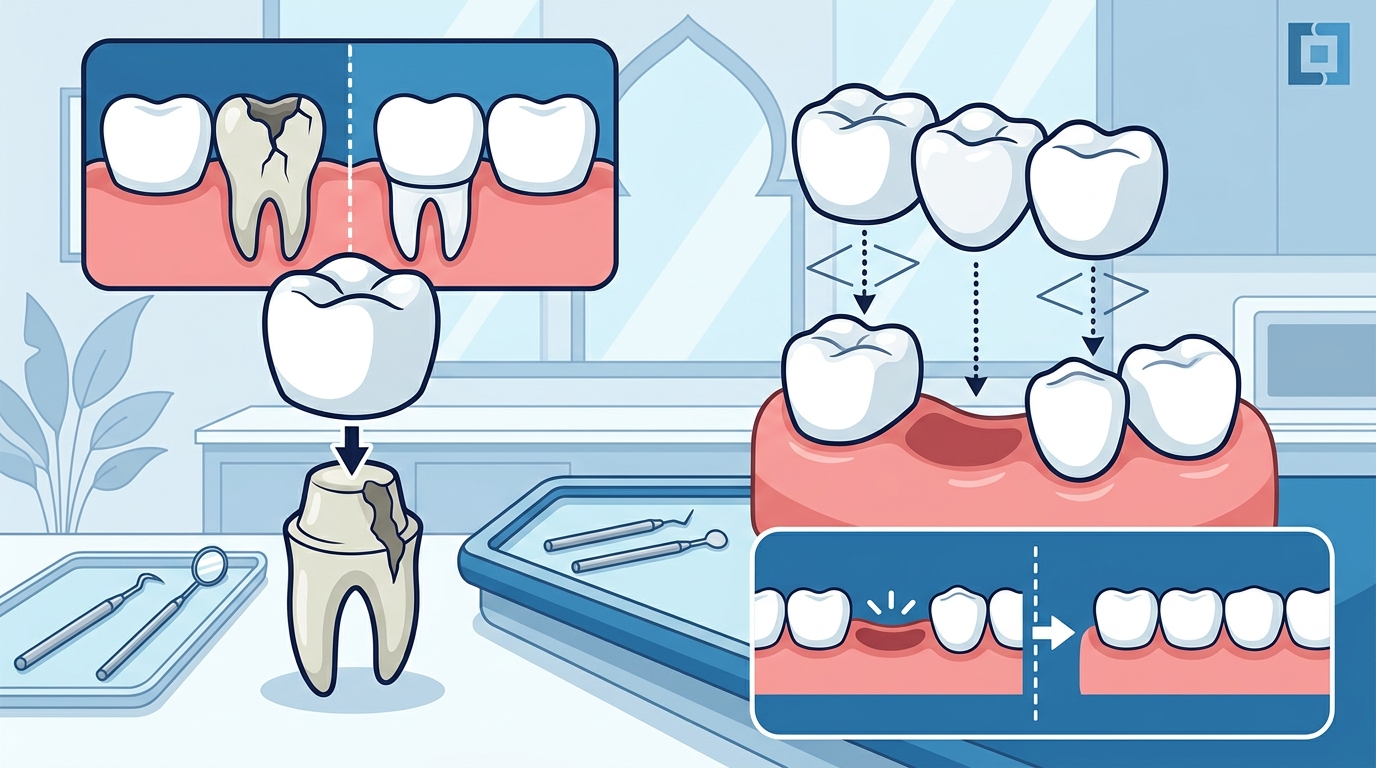
A dental crown is a custom-made, cap-like restoration that completely encircles a visible portion of a tooth. It serves as a protective shell for teeth that are cracked, weakened, or severely decayed. The primary function of a crown is to restore the tooth's original shape, size, and appearance while reinforcing its structural integrity. Unlike fillings that only address small cavities, crowns provide comprehensive coverage for teeth that have undergone significant damage.
Dental crowns are essential for saving teeth that would otherwise require extraction. They are typically fabricated from high-quality materials such as porcelain-fused-to-metal, zirconia, or full ceramic. These materials are chosen for their durability and ability to mimic the translucency of natural enamel. At EDHAK Center, we utilize advanced digital imaging to ensure that every crown fits precisely against your adjacent teeth, preventing gum irritation and ensuring a natural bite.
The process begins with the preparation of the damaged tooth. The dentist removes any decay and shapes the tooth to accommodate the crown's thickness. An impression or digital scan is taken to create a model for the laboratory. Once the custom crown is ready, it is permanently cemented onto the prepared tooth. This procedure not only restores function but also prevents further fracture of the underlying tooth structure.
Understanding Dental Bridges
A dental bridge is a fixed prosthetic device used to replace one or more missing teeth. The bridge "bridges" the gap created by the missing tooth by anchoring to the natural teeth on either side of the space. These supporting teeth are called abutments. The false tooth, known as a pontic, is suspended between the abutments and is designed to look and function like a natural tooth.
Dental bridges are the standard solution for replacing missing teeth without the need for surgery. They are particularly useful when the adjacent teeth are already compromised and require crowns themselves. By combining the bridge with the crowns on the abutments, the dentist can restore both the missing tooth and the health of the supporting teeth simultaneously. This dual benefit makes bridges a highly efficient restorative option for many patients in Banha.
There are several types of bridges, including traditional fixed bridges, cantilever bridges, and Maryland bridges. Traditional bridges are the most common, involving crowns on both sides of the gap. Cantilever bridges are used when there are adjacent teeth on only one side of the missing tooth. Maryland bridges use a metal or porcelain framework bonded to the back of adjacent teeth, requiring minimal alteration to the natural tooth structure. The choice of bridge depends on the location of the missing tooth and the strength of the surrounding teeth.
Key Differences Between Crowns and Bridges
While both crowns and bridges are restorative dental procedures, they serve different primary purposes. A crown is designed to protect and restore a single, existing tooth. In contrast, a bridge is designed to replace a missing tooth by spanning the gap between two other teeth. Understanding this distinction is crucial for determining the correct treatment plan.
| Feature | Dental Crown | Dental Bridge |
|---|---|---|
| Primary Purpose | Restores a damaged or weakened tooth | Replaces a missing tooth |
| Number of Units | Single unit covering one tooth | Multiple units (crowns + pontic) |
| Tooth Preparation | Shaving down the damaged tooth | Shaving down adjacent healthy teeth |
| Impact on Adjacent Teeth | No impact on neighboring teeth | Requires alteration of adjacent teeth |
| Longevity | 10 to 15 years or more | 5 to 15 years depending on care |
The decision between a crown and a bridge often depends on the condition of the surrounding teeth. If the adjacent teeth are healthy and intact, a dentist might recommend an implant instead of a bridge to avoid altering healthy tooth structure. However, if the adjacent teeth already have large fillings or require crowns, a bridge becomes a logical and cost-effective choice. This strategic approach ensures that the overall health of the dental arch is maintained.
The Procedure: What to Expect
Both dental crowns and bridges follow a similar multi-step process, beginning with a comprehensive examination and ending with the permanent placement of the restoration. At EDHAK Center, we ensure that every step is performed with precision and care to minimize discomfort and maximize results.
Initial Examination and Planning
The process starts with a detailed clinical examination and X-rays to assess the health of the tooth or teeth involved. The dentist evaluates the bone structure, gum health, and the position of adjacent teeth. This diagnostic phase is critical for determining whether a crown or bridge is the appropriate solution. We also discuss your aesthetic preferences and functional needs to tailor the treatment plan to your specific situation.
Tooth Preparation and Impressions
For a crown, the damaged tooth is numbed and carefully shaped to make room for the crown material. For a bridge, the adjacent teeth are similarly prepared to serve as abutments. Once the teeth are prepared, an impression or digital scan is taken. This model is sent to a specialized dental laboratory where your custom restoration is crafted. During this time, you may wear a temporary crown or bridge to protect the prepared teeth and maintain aesthetics.
Permanent Placement
When your custom restoration is ready, you will return to the clinic for the final appointment. The dentist removes the temporary restoration and checks the fit and color of the new crown or bridge. Adjustments are made if necessary to ensure a comfortable bite. Once satisfied, the restoration is permanently cemented into place. The entire process typically requires two visits, spaced about two weeks apart.
Maintenance and Longevity
The longevity of dental crowns and bridges depends heavily on proper oral hygiene and regular professional care. With diligent maintenance, these restorations can last for many years, often exceeding a decade. However, neglecting oral hygiene can lead to decay at the margins of the restoration, potentially compromising the underlying tooth structure.
Regular brushing and flossing are non-negotiable for the longevity of your dental work. For bridge patients, special attention must be paid to cleaning under the pontic. Using a floss threader or an interdental brush can help remove plaque and food debris from areas that a regular toothbrush cannot reach. Additionally, avoiding hard foods like ice or hard candy can prevent the porcelain from chipping or the cement from failing.
Regular dental check-ups are essential for monitoring the health of your restorations. At EDHAK Center, we provide comprehensive maintenance plans to ensure your crowns and bridges remain in optimal condition. Early detection of any issues, such as gum inflammation or minor decay, allows for prompt intervention and prevents more extensive treatment in the future.
Key Takeaways
- Dental Crowns are custom caps that restore the shape, size, and strength of a damaged tooth, protecting it from further fracture.
- Dental Bridges are fixed prosthetics that replace missing teeth by anchoring to adjacent natural teeth, filling the gap effectively.
- Material Choice matters significantly, with zirconia and porcelain offering superior aesthetics and durability for both crowns and bridges.
- Tooth Preparation for a bridge requires altering healthy adjacent teeth, whereas a crown only affects the damaged tooth itself.
- Longevity of both restorations relies on rigorous oral hygiene, regular dental visits, and avoiding habits like teeth grinding.
- EDHAK Center in Banha utilizes advanced digital scanning technology to ensure precise fits and comfortable experiences for all patients.
- Consultation is the critical first step to determine whether a crown, bridge, or implant is the best option for your specific dental anatomy.
Frequently Asked Questions
How long does a dental crown last?
With proper care, a dental crown can last between 10 and 15 years, and often longer. Factors such as oral hygiene, diet, and habits like grinding can influence its lifespan.
Are dental bridges permanent?
Dental bridges are considered a permanent restoration because they are cemented in place and cannot be removed by the patient. However, they may need to be replaced after several years due to wear or changes in the supporting teeth.
Does getting a crown hurt?
The procedure is performed under local anesthesia, so you should not feel pain during the treatment. Some sensitivity or mild discomfort may occur after the anesthesia wears off, but this is typically manageable with over-the-counter pain relievers.
Can I get a bridge if I have gum disease?
Active gum disease must be treated before placing a bridge. Healthy gums and bone structure are essential for the success and longevity of the restoration. Your dentist will address any periodontal issues first.
How do I clean under a dental bridge?
Cleaning under a bridge requires special tools such as floss threaders, superfloss, or interdental brushes. These tools allow you to clean the area beneath the pontic and around the abutment teeth effectively.
What is the difference between a crown and a veneer?
A crown covers the entire tooth, providing structural support for damaged teeth. A veneer is a thin shell that covers only the front surface of the tooth, primarily used for cosmetic improvements on healthy teeth.
Is the process for getting a crown different from a bridge?
The initial steps are similar, involving tooth preparation and impressions. The key difference is that a bridge involves preparing two or more teeth to support the false tooth, while a crown focuses on a single tooth.
Schedule Your Consultation
Restoring your smile is a critical step toward reclaiming your oral health and confidence. Whether you need a single crown to save a damaged tooth or a bridge to replace a missing one, EDHAK Center in Banha is equipped to provide expert care. Our team is dedicated to using the latest dental technologies to ensure your comfort and satisfaction. Do not let tooth loss or decay compromise your quality of life any longer. Book an appointment today to discuss your restorative options with Dr. Moosa and our professional dental team. Visit our services page to learn more about our comprehensive dental care offerings. Explore our before and after gallery to see the results we achieve for our patients. For more insights on dental health, read our blog posts. If you have additional questions, check our frequently asked questions section. Learn more about our philosophy and approach on our about page.