

Choosing the right dental implant is one of the most critical decisions in restorative dentistry. According to the American College of Prosthodontists, over 3 million people in the United States already have dental implants, and that number grows by 500,000 each year. This surge in demand highlights the importance of understanding the specific materials used in your procedure. At EDHAK Center, we believe that informed patients make the best choices for their long-term oral health. This guide breaks down the key differences between titanium and zirconia implants to help you determine which option aligns with your biological needs and aesthetic goals.
Understanding Titanium Implants
Titanium has been the gold standard in dental implantology for decades. Its dominance is not accidental but rooted in its exceptional physical properties. Titanium is a metal that exhibits high strength-to-weight ratio and remarkable corrosion resistance. This makes it ideal for withstanding the immense forces of chewing in the posterior regions of the mouth.
The primary mechanism behind titanium success is osseointegration. This is the process where bone cells grow directly onto the surface of the implant, creating a rigid, permanent bond. According to data from the Journal of Clinical Periodontology, titanium implants have a success rate exceeding 95% over ten years. This longevity is why most general dentists and specialists default to titanium for standard restorative cases.
However, titanium is not without its aesthetic limitations. Because the metal is dark, it can sometimes show through thin gum tissue, leading to a grayish tint at the gumline. This is particularly noticeable in patients with a high smile line or thin biotypes. Additionally, some patients report metal sensitivities, although true allergic reactions to medical-grade titanium are rare.
The Rise of Zirconia Implants
Zirconia, or yttria-stabilized tetragonal zirconia polycrystal, represents the modern alternative to metal implants. Zirconia is a high-strength ceramic material that is entirely metal-free. It is prized for its tooth-like color and translucency, which allows for superior aesthetic integration, especially in the front of the mouth.
The appeal of zirconia lies in its biocompatibility and hygiene benefits. Zirconia is a ceramic that does not attract plaque and bacteria as readily as titanium. This characteristic makes it an excellent choice for patients with gum disease history or those who are highly sensitive to metal ions. Furthermore, the white color eliminates the risk of gray show-through, providing a natural appearance even in thin gum tissues.
Despite these advantages, zirconia implants are a relatively newer technology in widespread clinical use. While early concerns about brittleness have been addressed with advanced manufacturing techniques, long-term data spanning several decades is not yet as robust as that for titanium. However, recent studies indicate that zirconia implants are a viable and safe option for many patients.
Key Differences: Material & Biocompatibility
The fundamental difference between these two options is the material composition. Titanium is a metal alloy, typically grade 4 or grade 5 titanium. Zirconia is a ceramic oxide. This distinction drives all other differences in performance, aesthetics, and surgical approach.
Biocompatibility and Allergies
For patients with known metal allergies or sensitivities, zirconia is often the preferred choice. Titanium is generally safe, but in rare cases, it can cause hypersensitivity reactions. Zirconia is hypoallergenic by nature, making it a safer bet for sensitive individuals. According to the International Journal of Oral & Maxillofacial Implants, zirconia implants show excellent soft tissue response and minimal inflammation in clinical trials.
Aesthetic Outcomes
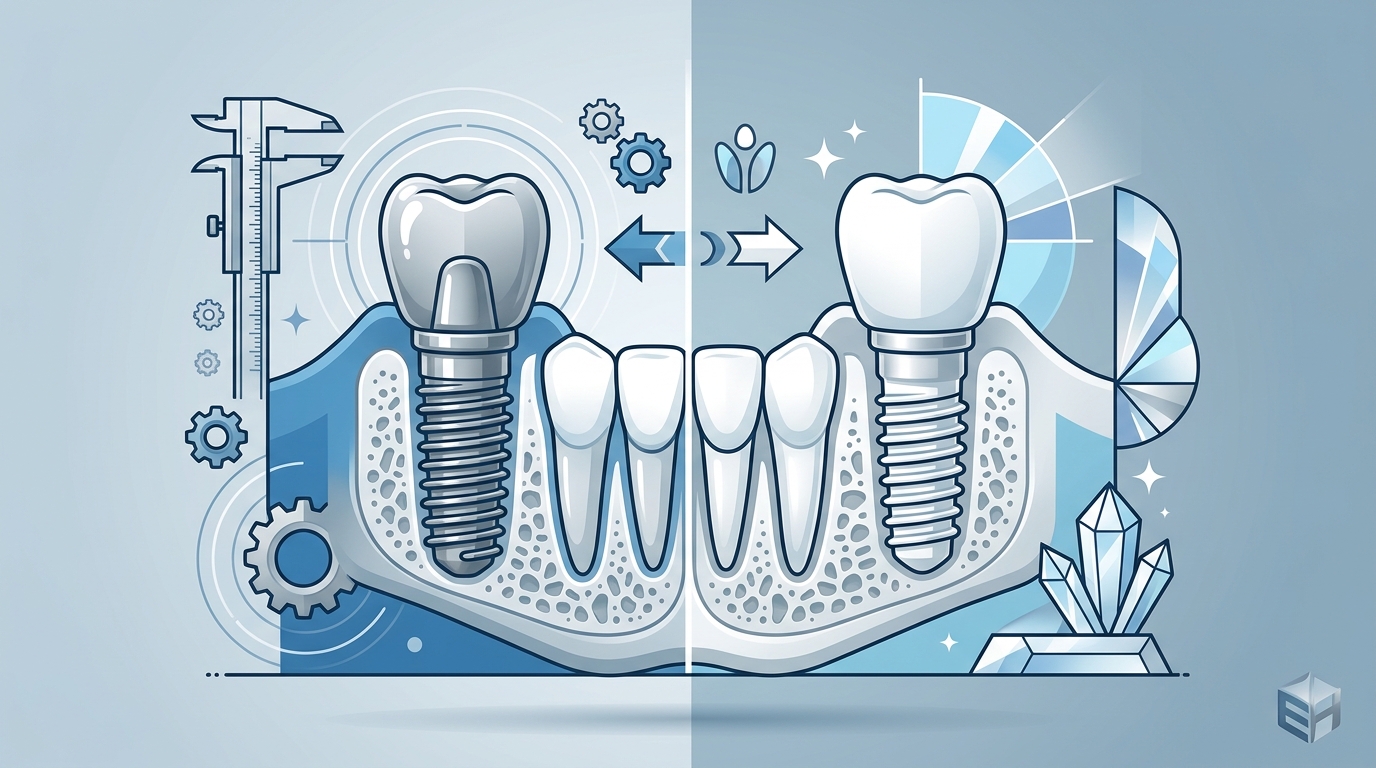
Aesthetics is the primary driver for choosing zirconia. In the anterior zone, where smiles are most visible, the white color of zirconia blends seamlessly with natural teeth. Titanium implants may require a zirconia abutment or a thick gum tissue cover to mask the metal color. If you have a high smile line, zirconia offers a more predictable aesthetic result without additional masking techniques.
Surgical Considerations
Surgically, titanium implants are more forgiving. They can be placed in a wider range of bone densities and volumes. Zirconia implants are rigid and brittle, requiring precise surgical planning and sufficient bone volume to prevent fracture during placement. At EDHAK Center, we use advanced 3D imaging to determine if your bone structure can support a zirconia implant safely.
Cost and Longevity Analysis
Cost is a significant factor in the decision-making process. Generally, zirconia implants are more expensive than titanium implants. This price difference is due to the complex manufacturing process required to create high-strength ceramic implants. Titanium implants benefit from economies of scale and decades of standardized production.
When considering longevity, titanium remains the champion. With proper care, titanium implants can last a lifetime. Zirconia implants are durable, but their long-term track record is still being established. Most manufacturers offer warranties, but the historical data for titanium is simply more extensive. For patients prioritizing maximum longevity and cost-effectiveness, titanium is often the logical choice. For those prioritizing aesthetics and metal-free materials, zirconia is worth the investment.
Comparison Table
The following table summarizes the key differences to help you compare dental implant options quickly.
| Feature | Titanium Implants | Zirconia Implants |
|---|---|---|
| Material Type | Metal Alloy | High-Strength Ceramic |
| Aesthetics | May show gray tint in thin gums | White, natural tooth color |
| Biocompatibility | High, but rare metal sensitivities exist | Excellent, hypoallergenic |
| Osseointegration | Proven, rapid bone bonding | Good, but requires precise placement |
| Cost | More affordable | Higher cost due to manufacturing |
| Longevity | Decades of proven success | Increasingly positive long-term data |
Key Takeaways
- Titanium is the gold standard: It has the longest track record of success and is suitable for most bone types.
- Zirconia offers superior aesthetics: Its white color prevents gray show-through, ideal for high smile lines.
- Biocompatibility varies: Zirconia is hypoallergenic, while titanium is safe for most but not all patients.
- Cost differences exist: Zirconia implants typically cost more due to complex manufacturing processes.
- Surgical precision is key: Zirconia requires more precise bone volume and surgical planning than titanium.
- Hygiene benefits: Zirconia attracts less plaque, which can benefit patients with gum disease history.
- Professional evaluation is essential: Only a clinical exam and 3D scan can determine which implant is right for you.
Frequently Asked Questions
Are zirconia implants as strong as titanium?
Zirconia is a high-strength ceramic that can withstand normal chewing forces. However, it is more brittle than titanium and can fracture under extreme pressure. Titanium is generally more forgiving in terms of load distribution.
Which implant lasts longer?
Titanium implants have a proven track record of lasting 20 to 30 years or more. Zirconia implants are durable, but their long-term data is still being collected. Both can last a lifetime with proper care.
Can I get zirconia implants if I have thin gums?
Yes, zirconia is often the better choice for patients with thin gums because it does not show through the tissue. Titanium implants may require additional soft tissue grafting to mask the metal color.
Are zirconia implants metal-free?
Yes, zirconia implants are entirely metal-free. They are made from yttria-stabilized tetragonal zirconia polycrystal, making them ideal for patients with metal sensitivities.
How much do zirconia implants cost compared to titanium?
Zirconia implants are typically more expensive than titanium implants due to the complex manufacturing process. The exact cost depends on the complexity of your case and the number of implants needed.
Do zirconia implants integrate with bone?
Yes, zirconia implants integrate with bone through osseointegration. However, the process may be slightly slower than with titanium, and precise surgical placement is critical for success.
Is titanium safe for everyone?
Titanium is safe for the vast majority of patients. However, those with known metal allergies or sensitivities should consider zirconia as an alternative.
Schedule Your Consultation
Choosing between titanium and zirconia implants is a personal decision that depends on your unique oral anatomy, aesthetic goals, and budget. At EDHAK Center, we provide comprehensive evaluations to help you make the best choice. Our team uses advanced technology to assess your bone density and gum tissue thickness. We invite you to book an appointment today to discuss your options. Visit our dental services page to learn more about our implant procedures. Explore our before and after gallery to see real patient results. Read our blog posts for more dental health insights. Check our FAQ section for common questions. Learn more about our clinic mission and vision.